Garden Hose: Types, Sizes and How to Choose
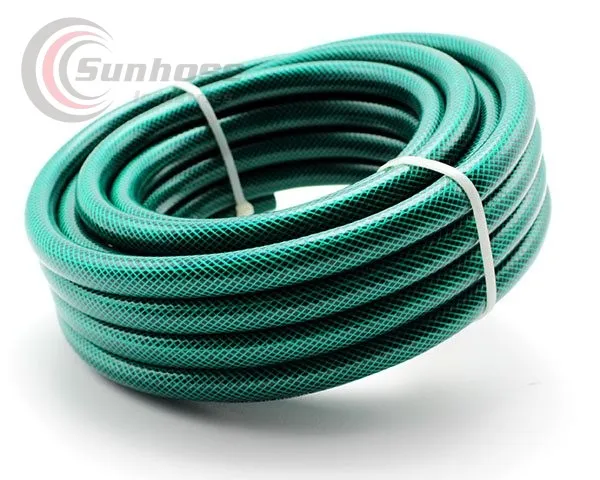
A garden hose is a flexible tube for conveying water at household pressure — typically 3 to 6 bar (45–90 psi) — for irrigation, cleaning and general discharge. They look interchangeable on a shelf. They are not: diameter changes flow rate by a factor of two, and material changes service life by a factor of five.
This guide covers what actually differs between hoses, and — for anyone buying or importing them — the chemical compliance rules that decide whether a hose can legally be sold in a given market.
Diameter sets the flow rate
Length is what buyers think about. Diameter is what determines whether the hose does the job. Approximate delivery at 40 psi supply pressure:
| Hose ID | 50 ft (15 m) run | 100 ft (30 m) run |
|---|---|---|
| 1/2 inch | ~9 GPM (34 L/min) | ~6 GPM (23 L/min) |
| 5/8 inch | ~17 GPM (64 L/min) | ~11 GPM (42 L/min) |
| 3/4 inch | ~23 GPM (87 L/min) | ~15 GPM (57 L/min) |
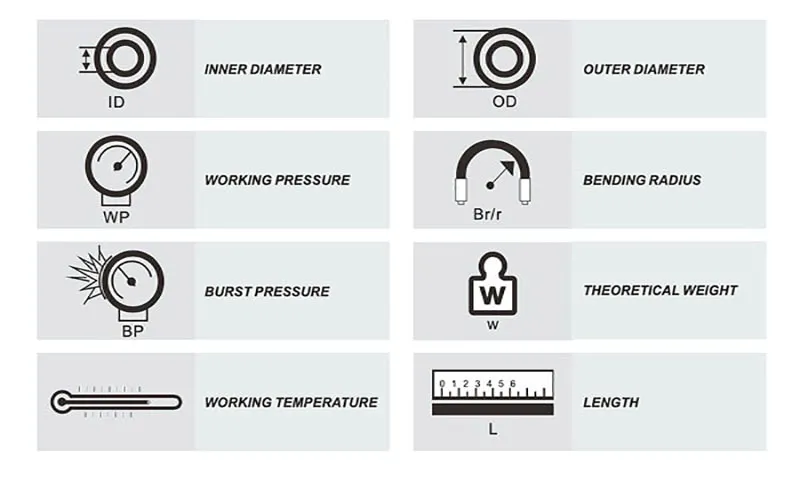 Garden hose diameter sizes
5/8 inch is the default for general garden use — it balances flow against weight and is what most nozzles and sprinklers are designed around. Move to 3/4 inch only for long runs, filling large containers, or where supply pressure is already low. Drop to 1/2 inch for balconies, potted plants and light washing, where a lighter hose matters more than volume.
Note how much the 100 ft column costs you. Doubling length takes roughly a third off the flow. If you need reach and volume, go up a diameter rather than adding length at the same size.
Materials
Material is the main factor in how long a hose lasts.
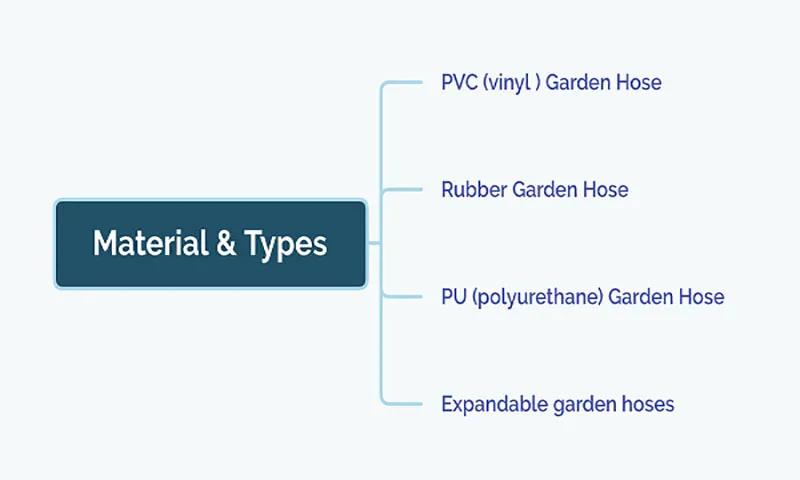 Types of garden hoses
| PVC (vinyl) | Rubber | Polyurethane (PU) | Hybrid | |
|---|---|---|---|---|
| Weight | Lightest | Heaviest, 3–4× PVC | Light | Light |
| Cold weather | Stiffens, can crack | Unaffected by frost | Stays flexible | Good |
| UV resistance | Depends on formulation | Good | Moderate | Good |
| Kink resistance | Moderate, better when reinforced | Excellent | Moderate — can tangle | Good |
| Service life | Shortest | Longest | Medium | Medium–long |
| Price | Lowest | Highest | High | Middle |
PVC garden hose is the standard, popular option, normally reinforced with a high-tensile fibre braid. It is the cheapest and lightest choice and perfectly adequate for light garden work. The failure mode to know about: PVC made from poor raw material becomes brittle and cracks after a season or two of temperature cycling. The difference between a hose that lasts one year and one that lasts six is resin quality and plasticiser content, neither of which is visible on the shelf.
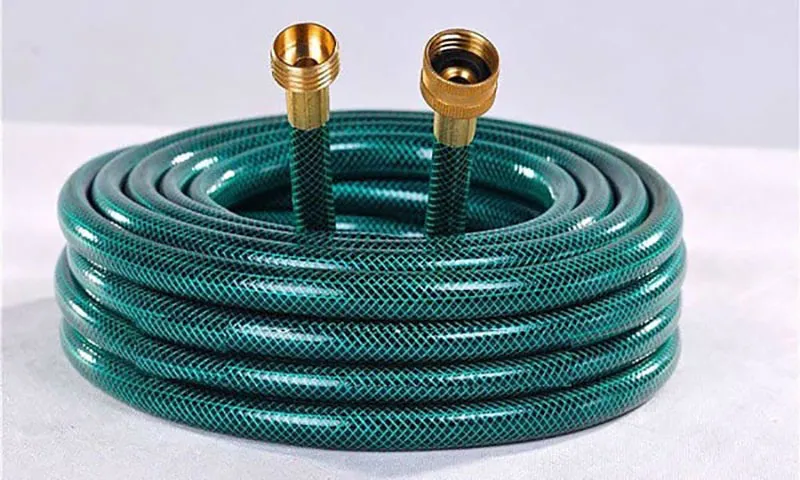 PVC fibre-reinforced garden hose
Rubber garden hose tolerates temperature swings, resists mechanical deformation and twisting, and when reinforced is very difficult to puncture. Frost and UV do not trouble it, and it outlasts vinyl comfortably. Its drawback is weight — genuinely tiring to drag around a garden. Check the composition too: some rubber compounds contain heavy metals or other restricted substances, which matters if the hose will be used near vegetable beds.
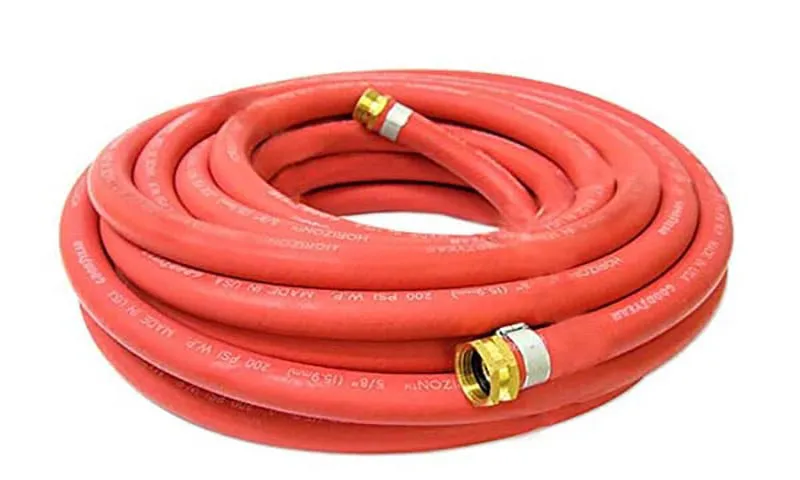 Red rubber garden hose
Polyurethane weighs far less than rubber and coils easily, but is not as durable — it will eventually crack, and it can kink or tangle. It also costs more than PVC.
Expandable hoses are made from an elastic inner tube inside a woven fabric jacket. They contract to roughly a third of their working length when drained, which makes them very easy to store, and they are kink-free when filled. Their weaknesses are specific: they cannot take freezing, and UV breaks down the fabric jacket until it frays. Flow rate is also lower than a rigid hose of equivalent nominal size, so they are poor for high-pressure work.
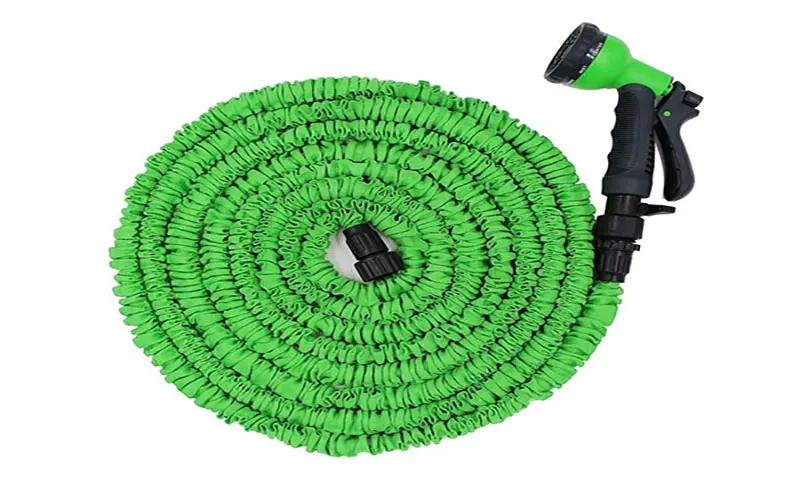 Expandable garden hoses
Types by application
- Standard garden hose — general watering, 25–100 ft, 1/2" to 3/4". The default purchase.
- Heavy-duty reinforced hose — extra braid or mesh layers for pressure washing and commercial use.
- Soaker hose — releases water slowly along its whole length for beds and deep-rooted plants. Reduces runoff substantially compared with overhead watering.
- Flat / layflat hose — rolls up compactly, used for seasonal irrigation and water transfer rather than day-to-day watering. See PVC layflat hose for the industrial version.
- Expandable hose — small gardens and limited storage.
- Coil / recoil hose — balconies and patios, short runs only.
Fittings, couplings and reels
Fittings connect the hose to the tap and to accessories. The common failure point is the fitting, not the hose.
- Brass fittings resist corrosion and survive being stepped on. Worth the extra cost.
- Heavy-duty plastic fittings are lighter and cheaper, and acceptable for light use.
- Quick-connect fittings allow tool changes in seconds and are the usual choice for consumer hoses.
- Barbed fittings with a clamp give the most secure connection and are standard for repairs.
- Couplings join two lengths of hose. Every joint is a potential leak and a small flow restriction.
Thread standards differ by market — GHT (3/4"-11.5) in North America, BSP in the UK and much of Asia, and various click-fit systems in continental Europe. They are not interchangeable, which matters when specifying for export.
A hose reel is not an accessory so much as a maintenance tool. Coiling by hand builds in the tight bends that later become cracks; a reel keeps the bend radius wide and the hose out of the sun.
Chemical compliance — the part that blocks shipments
If a hose might contact drinking water or edible plants, its formulation is regulated, and requirements differ by destination:
| Requirement | Market | What it covers |
|---|---|---|
| Lead-free | US (California Prop 65 and others) | Lead in the compound and in brass fittings |
| Phthalate limits | EU (REACH Annex XVII) | DEHP, DBP, BBP and related plasticisers |
| "Drinking water safe" | US (NSF/ANSI 61), EU national schemes | Full migration testing of everything water touches |
| Heavy metals | Most markets | Cadmium, lead and others in pigments and stabilisers |
Two practical notes. First, brass fittings are a common source of lead even on a hose whose tube is compliant — the fitting has to be certified too. Second, a generic "non-toxic" claim from a supplier means nothing; ask which standard, which test house, and for the report. Buyers importing into the EU or California who skip this step are the ones whose containers get held.
For a fuller treatment of sourcing and documentation, see what to know before you import garden hose.
Maintenance
- Drain after use. Standing water breeds mould, and in winter it freezes and splits the tube.
- Store on a reel, out of the sun. UV is the primary ageing mechanism for both PVC and fabric-jacketed hoses.
- Avoid sharp bends. A kink restricts flow immediately and weakens the wall permanently.
- Don't drive over it. Crushing damages the reinforcement even when the outside looks fine.
- Winterise. Bring hoses indoors in freezing climates — this single habit roughly doubles the life of a PVC hose.
- Check fittings and washers. Most "leaking hoses" are leaking washers, a few cents to fix.
FAQ
What size garden hose should I buy? 5/8 inch for general use. 3/4 inch for long runs or high volume, 1/2 inch for light work where weight matters.
How long does a garden hose last? A well-maintained quality hose lasts 5–10 years. A cheap PVC hose left outdoors year-round may not survive two seasons.
Is it safe to drink from a garden hose? Only from a hose specifically labelled drinking-water safe and certified to a recognised standard. Ordinary hoses may leach plasticisers, and brass fittings may contain lead.
Rubber or PVC — which is better? Rubber lasts longer and handles cold and abrasion better. PVC is far lighter and much cheaper. For most home gardens, a good reinforced PVC hose is the better value; for daily professional use, rubber. A detailed comparison is here.
Are expandable hoses any good? For small gardens and easy storage, yes — provided the quality is decent. They are not suitable for freezing conditions, prolonged sun exposure, or high-pressure tasks.
How do I fix a leaking garden hose? For end leaks, replace the washer or fitting. For a split in the middle, cut out the damaged section and rejoin with a repair coupling.
Why does my water pressure drop with a longer hose? Friction along the wall. Every extra length costs flow, and the effect is much stronger on narrow hoses — which is why going up a diameter beats adding length.
Sunhose manufactures PVC garden hose, reinforced and hybrid garden hose, and expandable hose for distributors and importers worldwide, with compliance testing for the destination market. Send us your specification for a quotation.