PVC Steel Wire Reinforced Hose vs. Polyurethane Hose
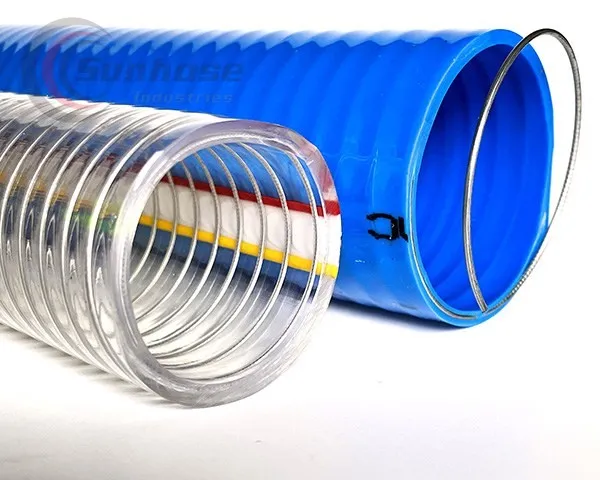
PVC Steel Wire Reinforced Hose vs. Polyurethane Hose: A Comparative Analysis
When it comes to selecting the right hose for your specific needs, two popular options often come to mind: PVC Steel Wire Reinforced Hose and Polyurethane Hose. Both hoses have their unique advantages and are suitable for various applications. Let's delve into a comparative analysis to help you make an informed decision: 1. Material Composition:
- PVC Steel Wire Reinforced Hose: This hose is made from PVC (Polyvinyl Chloride) material, strengthened with a steel wire helix, which provides excellent flexibility and durability.
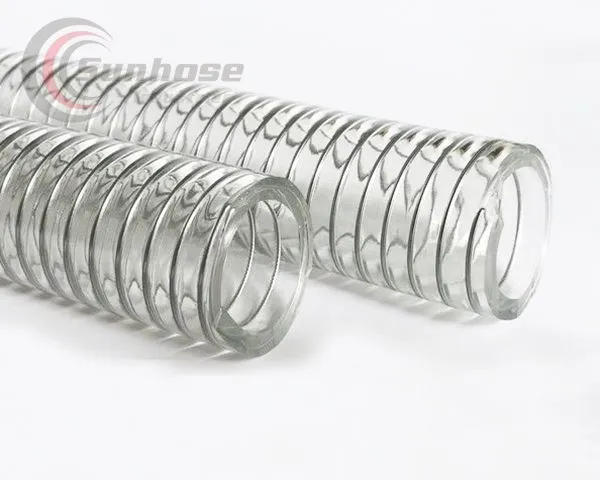 steel wire reinforced PVC hose
 - Polyurethane Hose: Polyurethane is a synthetic polymer, offering high abrasion resistance and flexibility, making it ideal for rugged applications.
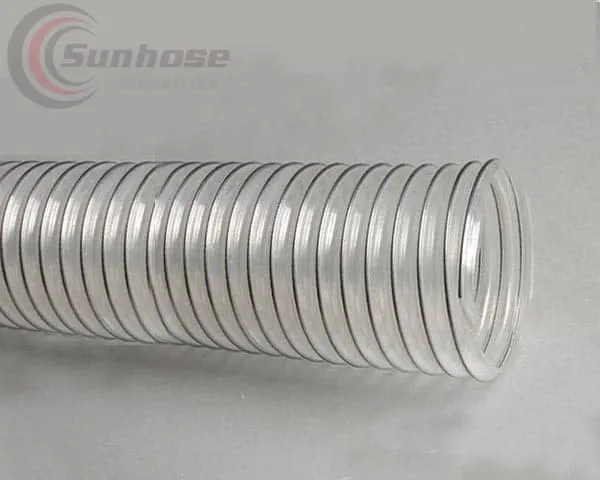 TPU Suction Hose
2. Flexibility:
- PVC Steel Wire Reinforced Hose: With its steel wire reinforcement, this hose maintains its shape even under pressure, ensuring smooth flow and preventing kinks.
- Polyurethane Hose: Polyurethane hoses are extremely flexible, making them perfect for use in tight spaces or applications requiring frequent movement.
3. Temperature Range:
- PVC Steel Wire Reinforced Hose: Typically suitable for moderate temperature ranges, making it suitable for many standard applications. Temp. Range. : -10° C / +65° C (-14° F / +150° F)
- Polyurethane Hose: This hose can withstand a broader range of temperatures, including both low and high extremes, expanding its usability. Temp. Range. : - 35 ̊C to +90 ̊C (95°F to 194°F)
4. Abrasion Resistance:
- PVC Steel Wire Reinforced Hose: While generally durable, it may not be as resistant to abrasion as polyurethane hoses.
- Polyurethane Hose: Known for its exceptional abrasion resistance, polyurethane hoses are preferred in applications where wear and tear are common.
5. Chemical Compatibility:
- PVC Steel Wire Reinforced Hose: Has good resistance to a variety of chemicals, but compatibility should be checked for specific applications.
- Polyurethane Hose: Exhibits excellent resistance to a wide range of chemicals, making it a suitable choice for industries dealing with corrosive substances.
6. Applications:
- PVC Steel Wire Reinforced Hose: Commonly used in light to moderate-duty applications, such as irrigation, drainage, and vacuum lines.
- Polyurethane Hose: Well-suited for heavy-duty applications, including pneumatic tools, hydraulic equipment, and abrasive material transfer.
7. Cost:
- PVC Steel Wire Reinforced Hose: Generally more economical, making it a cost-effective option for many applications.
- Polyurethane Hose: Slightly higher in cost due to its advanced properties, but the long-term benefits can outweigh the initial investment.
In conclusion , both PVC Steel Wire Reinforced Hose and Polyurethane Hose have their merits, and the choice depends on the specific requirements of your application. PVC hoses are budget-friendly and work well for standard applications, while polyurethane hoses are a premium choice for demanding and abrasive environments. Evaluating factors such as flexibility, temperature range, chemical compatibility, and durability will help you determine the best fit for your needs.