Transparent Steel Wire PVC Hose
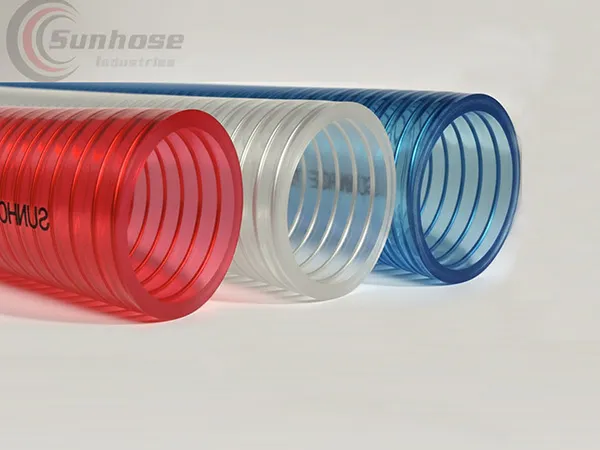
Transparent Steel Wire PVC Hose: A Complete Guide
What is aTransparent Steel Wire PVC Hose?
A transparent steel wire PVC hose is a type of industrial tubing made by combining the flexibility of polyvinyl chloride (PVC) with the strength of embedded steel wire spirals. This combination results in a hose that’s both transparent and reinforced , allowing it to handle suction, discharge, and fluid transfer operations under moderate pressure conditions.
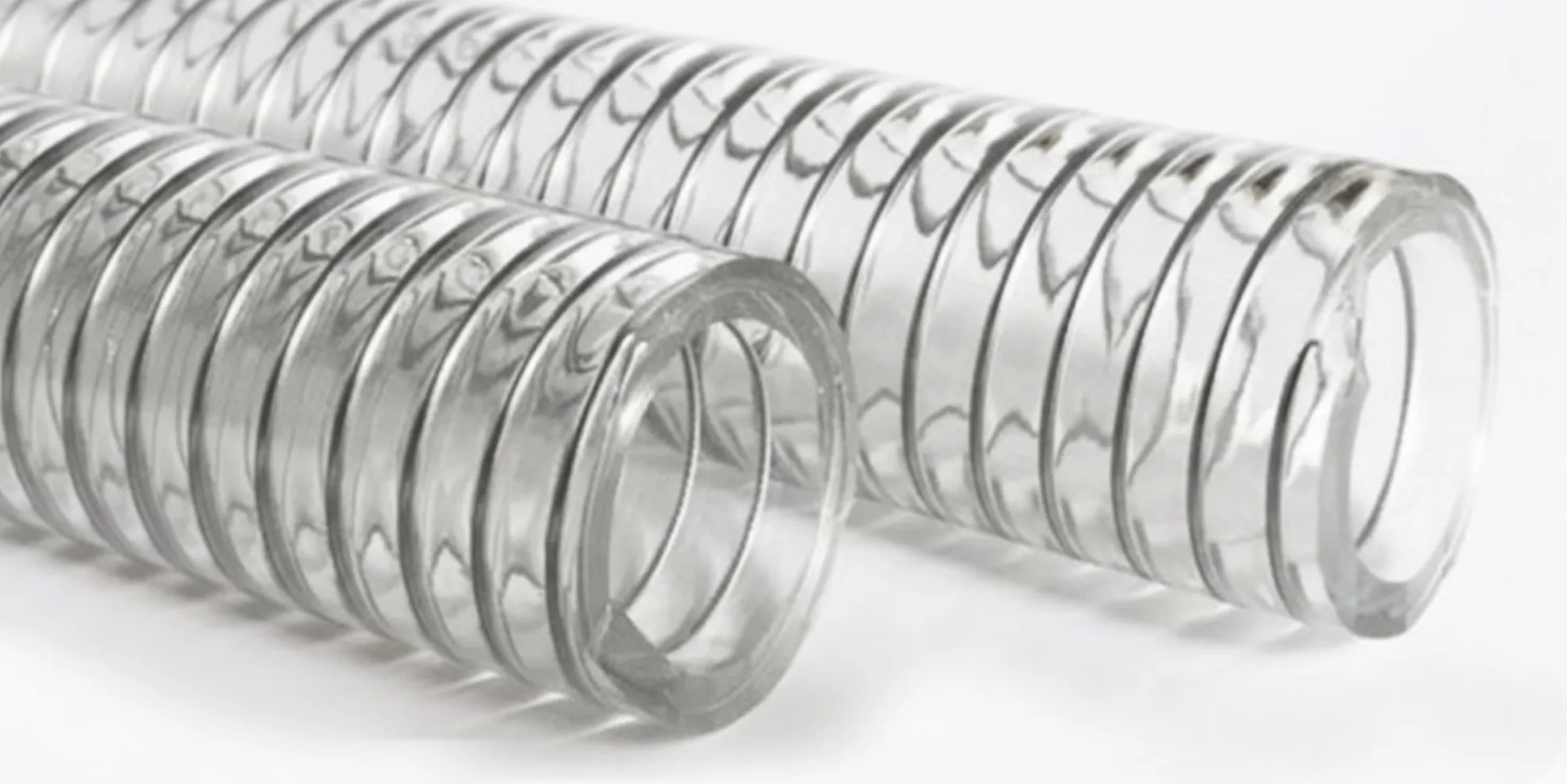 Transparent PVC Steel Wire Hose
Unlike ordinary rubber or plastic hoses, this type allows you to see the fluid flow inside , making it ideal for monitoring and maintaining cleanliness—especially in industries like food processing, pharmaceuticals, and agriculture. Its wire-reinforced structure gives it a unique advantage: it doesn’t collapse under vacuum conditions, yet remains flexible enough to bend and move easily in complex setups.
It’s lightweight, durable, and resistant to abrasion and corrosion, which makes it perfect for environments where both visibility and strength are important. Whether it’s transporting water, oil, or air, this hose performs reliably across a wide range of industrial and domestic applications.
Another major plus is its cost-effectiveness. Compared to stainless steel or rubber hoses, transparent steel wire PVC hoses offer a longer lifespan for the price, while being easy to clean and install. In short, it’s a perfect balance between strength, flexibility, and visibility —qualities that make it indispensable in modern industries.
Key Features and Unique Characteristics
What makes the transparent steel wire PVC hose so special? Let’s dive deeper into its defining features:
Transparency: The hose is completely see-through, allowing users to monitor fluid movement, check for blockages, and ensure cleanliness without disassembly.
Embedded Steel Wire: A spiral steel wire is integrated into the PVC body, giving the hose extra resistance against collapse, especially during suction or vacuum use.
Flexibility: Despite its internal reinforcement, it remains lightweight and easy to handle—ideal for tight spaces or moving equipment.
Chemical and Abrasion Resistance: The PVC material resists many acids, alkalis, and chemicals commonly used in industrial environments.
Temperature Range: Usually operates between -10°C to +65°C , depending on grade and manufacturer, suitable for a variety of climates.
Food-Grade Options: Certain types comply with FDA and EU food standards , ensuring safe use in beverage or dairy processing.
This hose bridges the gap between industrial efficiency and operational safety. It’s not just strong—it’s smartly designed to improve workflow, reduce downtime, and ensure transparency in every sense of the word.
Core Materials and Composition
PVC – Polyvinyl Chloride: The Backbone
The main ingredient in this hose is PVC (polyvinyl chloride) —a highly durable thermoplastic polymer known for its versatility. PVC is widely used across industries because of its ability to resist corrosion, abrasion, and chemical exposure. In this hose, PVC plays the crucial role of providing flexibility and smoothness, making the interior and exterior surfaces easy to clean and maintain.
PVC’s biggest strength lies in its chemical stability. It doesn’t react easily with most acids, alkalis, or industrial solvents, which is why it’s preferred in environments that deal with harsh or variable fluids. Its smooth interior wall also ensures that liquids or gases flow through without friction, reducing energy loss and improving efficiency.
Another important advantage is transparency. Because PVC can be produced in a crystal-clear form, it allows the hose to double as a visual inspection channel. Operators can immediately detect contamination, air bubbles, or blockages—something impossible with opaque hoses.
From a manufacturing standpoint, PVC is thermoplastic , meaning it softens when heated and hardens when cooled. This property allows manufacturers to mold it around a steel wire core, ensuring a tight, uniform bond that enhances the hose’s strength while maintaining flexibility.
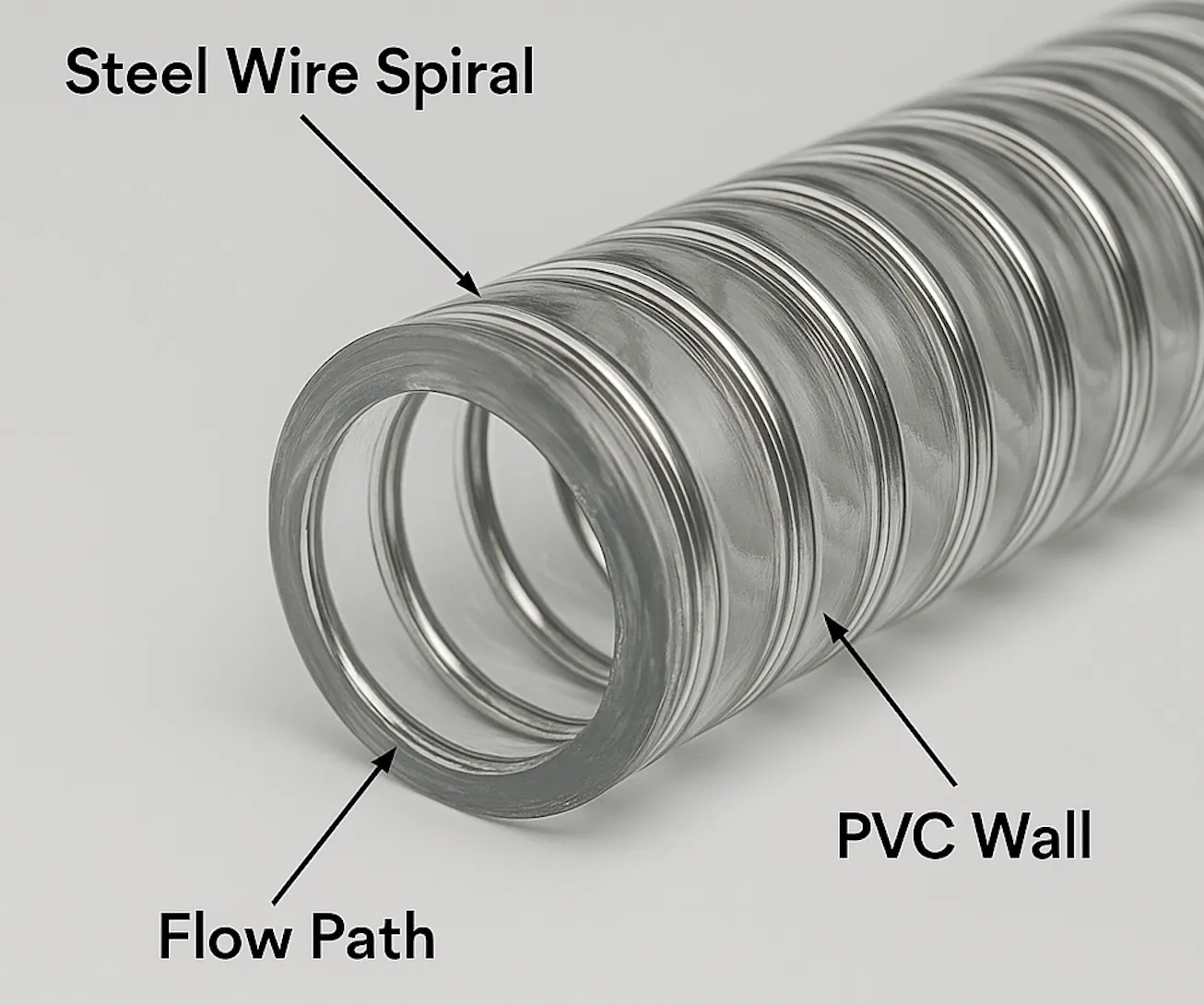 Transparent PVC Steel Wire Hose
In summary, PVC is not just a material—it’s the reason why this hose performs efficiently in both industrial and domestic applications.
Embedded Steel Wire: Strength and Flexibility
While PVC provides flexibility, it’s the embedded steel wire that gives this hose its real power. The wire is coiled into a continuous spiral and encased within the PVC walls during production. This unique construction combines metal strength with plastic flexibility , creating a hose that can handle both pressure and vacuum without collapsing.
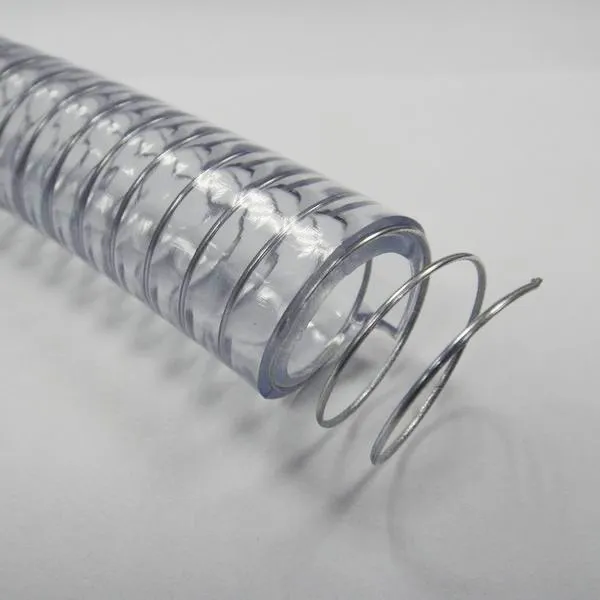 PVC spring hose
Imagine it like this—the steel wire acts as the skeleton, while the PVC serves as the skin. Together, they form a body that’s light yet resilient, flexible yet stable.
Here’s what the steel wire contributes:
Vacuum Resistance: The internal wire prevents the hose from flattening under suction, making it perfect for vacuum and suction applications.
Crush Resistance: Industrial floors are tough environments where hoses can get stepped on or compressed by machinery. The steel wire helps the hose bounce back without damage.
Extended Lifespan: The reinforced structure makes it last longer, even in environments where hoses are exposed to continuous bending and twisting.
Electrical Conductivity (Optional): In certain designs, the wire can help dissipate static electricity , providing added safety when transporting volatile substances.
Together, PVC and steel wire create a synergy that offers both flexibility and durability. Whether you’re using it in a dairy plant, a workshop, or an irrigation system, this internal reinforcement ensures long-term reliability and strength.
Advantages of Using Transparent Steel Wire PVC Hose
Durability and Pressure Resistance
Durability is one of the strongest selling points of transparent steel wire PVC hoses. When you’re working in a heavy-duty environment, you need something that won’t crack, kink, or collapse—and this hose delivers exactly that.
Its steel wire reinforcement ensures superior pressure handling capacity, both for suction (negative pressure) and discharge (positive pressure) operations. Unlike regular hoses that may flatten or burst under stress, the wire coil maintains the hose’s circular shape, ensuring smooth and uninterrupted fluid flow.
In addition, PVC itself contributes to the hose’s impact and abrasion resistance. It doesn’t tear easily, even when dragged over rough surfaces or exposed to sharp edges. This makes it ideal for industrial use where hoses are often moved, bent, and stepped on.
Here’s why it outlasts most alternatives:
Pressure Endurance: Handles medium to high-pressure applications without deformation.
Chemical Protection: Can resist light acids, oils, and alkalis—ideal for chemical plants and cleaning systems.
Long Lifespan: With proper care, it can last for years without significant wear.
Maintenance Ease: Its smooth inner wall prevents clogging and reduces cleaning frequency.
Simply put, this hose is built to endure. From the dairy line to the workshop, it maintains its shape, strength, and clarity even under heavy use.
Transparency for Flow Monitoring
Transparency isn’t just about aesthetics—it’s about efficiency and safety. The ability to see the fluid flow inside the hose allows operators to quickly detect and fix problems before they escalate.
In food or chemical applications, transparency helps confirm whether a system is clean, if the flow is steady, or if there’s any contamination. For instance, if you’re transferring milk or juice through a production line, you can easily monitor for foam, bubbles, or residues. In the chemical industry, visibility ensures that no unwanted reactions or impurities occur during transfer.
Here are the main benefits of having a transparent hose:
Visual Flow Control: You can instantly confirm whether fluids are moving as expected.
Leak and Blockage Detection: Any bubbles or discoloration can alert you to leaks or blockages early.
Quality Control: Ideal for hygiene-sensitive environments where product purity matters.
Operational Efficiency: Reduces downtime since you don’t have to disassemble hoses for inspection.
In short, transparency adds a layer of intelligence to your system. It turns the hose into both a conduit and a diagnostic tool—saving time, improving safety, and ensuring consistency in production.
Conclusion
The Transparent Steel Wire PVC Hose is more than a utility product — it’s an engineered solution offering clarity, safety, and durability. Whether for food processing, chemical transfer, or industrial vacuuming, this hose delivers reliable performance with long-term value.
FAQs
1. What is the main advantage of a transparent steel wire PVC hose?
It allows users to see the flow inside while maintaining strength and flexibility due to its steel wire reinforcement.
2. Can it be used for high-temperature applications?
Yes, but within the specified range of up to 70°C. Beyond that, specialized heat-resistant versions are recommended.
3. Is it suitable for food-grade applications?
Yes, food-grade versions made from non-toxic PVC comply with FDA and EU standards.
4. How long does a transparent steel wire PVC hose last?
Typically 3–5 years under normal use, depending on environmental and pressure conditions.
5. What sizes are available?
They range from small diameters (6 mm) to large suction hoses (200 mm), with customized options available.