Emergency Dewatering: How to Choose the Right Layflat Discharge Hose (4–12 Inch)
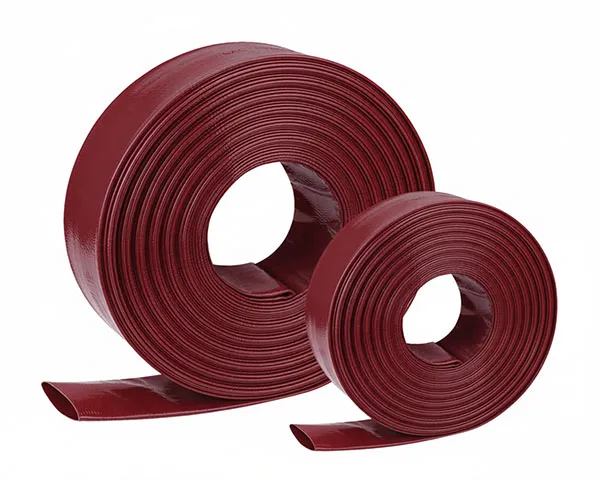
Emergency Dewatering: How to Choose the Right Layflat Discharge Hose (4–12 Inch)
In emergency dewatering operations—whether in flood control, mining sites, construction pits, or municipal drainage—the performance of the layflat discharge hose directly determines the speed, safety, and cost of the entire operation. Selecting the correct hose is not simply about size; it requires evaluating pressure rating, material durability, abrasion resistance, pump compatibility, and cost efficiency.
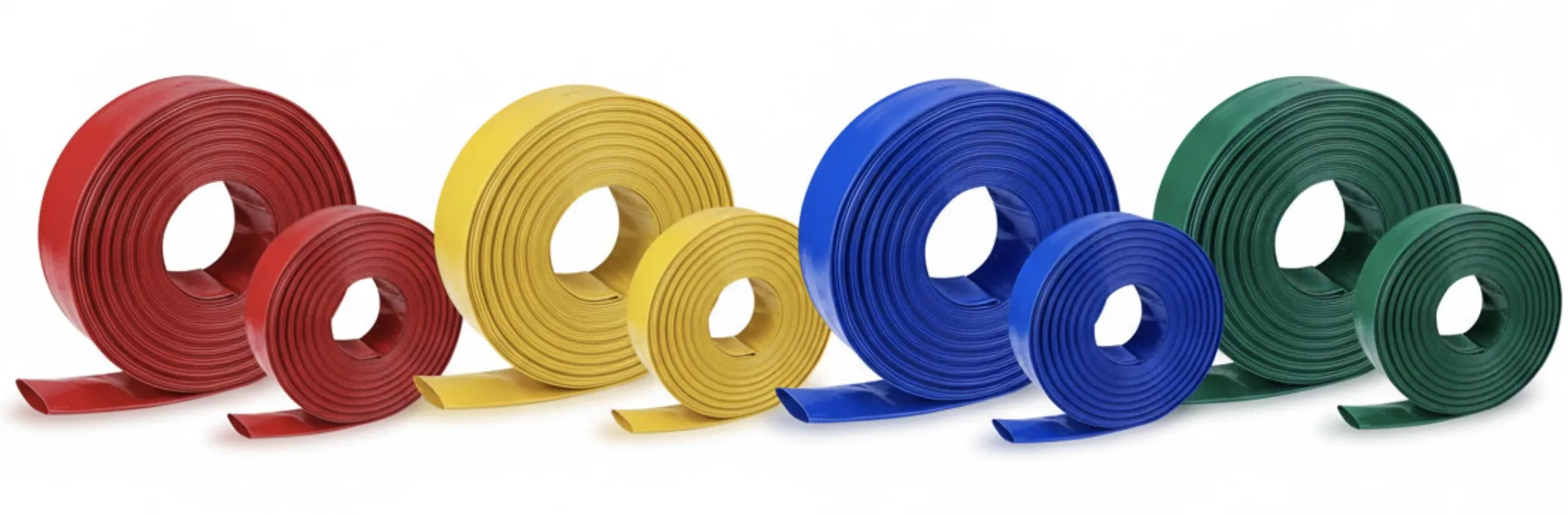 Layflat Discharge Hoses
This guide explains how to choose the right layflat discharge hose for emergency dewatering, with clear technical criteria and practical recommendations based on real industrial use cases.
1. Understanding Emergency Dewatering Requirements
Emergency dewatering typically involves:
High flow rates
Continuous long-distance pumping
Variable ground conditions
Abrasion from dragging
Exposure to sunlight, chemicals, or dirty water
Rapid deployment and retrieval
Because conditions are unpredictable, the hose must deliver consistent working pressure , high flexibility , and rapid roll-out efficiency. For most heavy-duty projects, buyers focus on 4", 6", 8", 10", and 12" hoses.
2. Key Hose Materials: PVC vs Rubber vs TPU
Choosing the correct material is a strategic decision that affects operational performance and lifecycle cost.
PVC Layflat Hose
Best for:
Medium pressure dewatering
Construction sites
Agriculture
Temporary drainage
Advantages:
Lightweight
Cost-effective
Easy to deploy and retrieve
Good for 2–6 bar working pressure
Limitations:
Lower abrasion resistance than rubber/TPU
Not ideal for extreme pressure or rocky terrain
Rubber Layflat Hose
Best for:
Mining
High-pressure applications
Long-term installations
Rocky or abrasive ground
Advantages:
Very high abrasion resistance
Handles high pressure
Longer lifespan
Limitations:
Heavy
Higher cost
Requires more labor to deploy
TPU (Thermoplastic Polyurethane) Layflat Hose
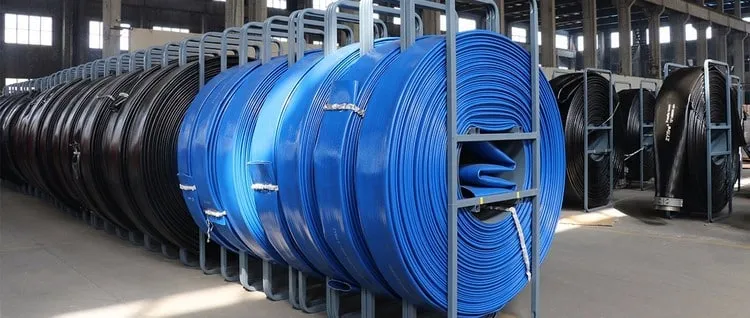 Tpu layflat hose
Best for:
Professional dewatering companies
Oil & gas
High-pressure long-distance pumping
Advantages:
Extremely durable
Superior flexibility
Highest abrasion resistance
Handles 10–20 bar
Long working life
Limitations:
- Premium price
3. How to Choose the Right Hose Diameter (4–12 Inch)
Selecting the correct diameter directly influences pumping efficiency.
4 Inch (Most common)
Use when:
Portable pumps (5–18 HP)
Small to medium dewatering sites
10–40 L/s flow rate
6 Inch
Use when:
Larger construction pits
Higher flow volume
Diesel pump systems
8–12 Inch
Use when:
Flood control
Municipal drainage
Mining operations
Large-scale emergency response
Rule of thumb:
Larger diameter = higher volume = lower friction loss.
4. Working Pressure: The Most Critical Specification
For dewatering, always check:
Pump maximum pressure
Hose working pressure (bar)
Safety factor (3:1 or 4:1)
Typical ranges:
PVC layflat hose: 2–6 bar
Rubber hose: 6–10 bar
TPU hose: 10–20 bar
If your pump operates at 4 bar, choose a hose with 6 bar working pressure to maintain safety.
5. Hose Thickness vs Durability
A common mistake is choosing a hose that is too thin.
Typical PVC thickness guidelines:
Light duty: 0.8–1.0 mm
Standard duty: 1.2–1.6 mm
Heavy duty: 1.8–2.3 mm
For emergency dewatering, 1.8 mm+ is strongly recommended.
6. Length Choices: 50 m vs 100 m
50 m Rolls
Easier to handle
Better for uneven ground
100 m Rolls
Reduces coupling points
Faster deployment on flat terrain
7. Abrasion Resistance: A Hidden Cost Driver
Dragging hoses across concrete, gravel, and mud can shorten hose life dramatically.
Material ranking (best to worst): TPU → Rubber → PVC
If your operation requires frequent relocation or dragging, choose thicker PVC or rubber hoses.
8. Common Hose Failures and How to Prevent Them
Bursting
Cause:
Pump pressure exceeds hose limit
Solution:Always choose a higher-rated hose
Use pressure gauges
Leakage at Couplings
Cause:
Low-quality clamps or aluminum couplings
Solution:Use heavy-duty couplings
Ensure tight torque control
Abrasion Damage
Solution:
Avoid sharp rocks
Use protective sleeve for hotspots
9. Recommended Hose Selection for Different Scenarios
Scenario A: Flood Control (High Urgency)
Recommended:
8"–12" PVC or TPU
Heavy-duty, ≥1.8 mm thickness
6–10 bar
Scenario B: Construction Dewatering
Recommended:
4" or 6" PVC
2–4 bar
Standard or heavy-duty
Scenario C: Mining Drainage
Recommended:
8"–12" Rubber or TPU
10–20 bar
Scenario D: Agriculture / Irrigation
Recommended:
2–3 bar PVC Layflat
Lightweight for easy handling
10. Why Sunhose Layflat Hose Is Trusted Globally
Sunhose hoses are known for:
High tensile strength
UV-resistant formulation
Reinforced polyester jacket
Customizable thickness & pressure
OEM branding
Fast production for 4"–12" bulk orders
Global export experience since 2005