How to Choose a Reliable PVC Hose Supplier from China for Middle East Buyers
How to Choose a Reliable PVC Hose Supplier from China for Middle East Buyers
Choosing a PVC hose supplier from China is one of the most important procurement decisions for businesses in the UAE, Saudi Arabia, Egypt, and across the Middle East. The wrong supplier means delayed shipments, substandard products, and costly replacements. The right supplier means consistent quality, on-time FOB delivery, and a long-term partnership that scales with your business.
 pvc hose for middle east buyers
This guide gives Middle East importers a practical, step-by-step framework for evaluating Chinese PVC hose manufacturers — covering factory verification, product certifications, MOQ requirements, pricing structure, and the red flags that experienced buyers know to watch for.
1. Define Your Product Requirements Before You Contact Any Supplier
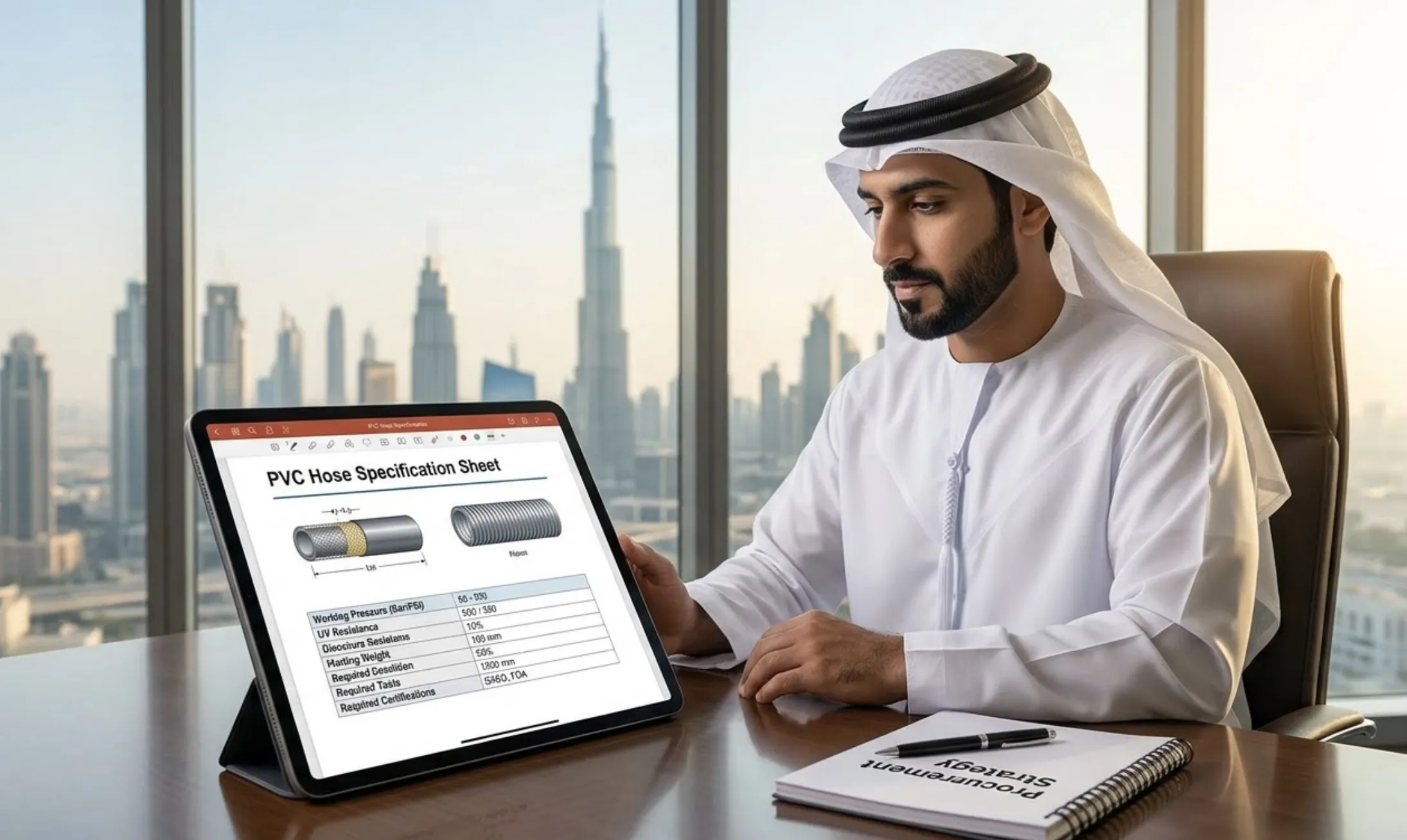
Before reaching out to any manufacturer, document exactly what you need. Vague inquiries attract vague quotes — and waste everyone's time.
Your product specification sheet should include:
Hose type: PVC layflat hose, PVC steel wire suction hose, rubber discharge hose, or clear reinforced PVC hose
Inner diameter (ID): Typically 1 inch to 12 inches for industrial and agricultural use
Working pressure: Measured in bar or PSI — standard agricultural layflat runs 4–10 bar
Length per roll: 50 m, 100 m, or custom coil lengths
Application environment: Irrigation, construction dewatering, chemical transfer, oil & gas
Required certifications: CE, RoHS, REACH, or food-grade compliance (FDA/NSF) if applicable
Annual volume estimate: This directly affects which factories will quote you seriously
Middle East buyers should also specify UV resistance and high-temperature tolerance requirements. Ambient temperatures in the Gulf regularly exceed 45°C, and a hose that performs well in European climates can fail prematurely in Saudi or UAE field conditions.
2. Verify the Factory — Not Just the Trading Company
China's hose supply chain has two layers: manufacturers (factories that actually produce) and trading companies (intermediaries who resell). Both can be legitimate, but you need to know which one you are dealing with.
How to verify a manufacturer:
Request the factory's business license and confirm the registered scope includes "rubber and plastic product"
Check the production photos or YouTube video — a real factory will show you the extrusion lines, reinforcement braiding machines, and testing equipment
Request a third-party audit report from SGS, Bureau Veritas, or TÜV if your order volume justifies it
Check their website,if there have many years,even they are trading company also good choice for you.Because of professional and supply chain they are very familar with it.
A trading company is not automatically a bad choice — some offer better English communication and consolidated shipping. But never pay a trading company's margin while assuming you have direct factory pricing.
3. Evaluate Product Quality — Ask the Right Technical Questions
Price comparison alone is a poor evaluation method. Two suppliers quoting the same product at different prices are often quoting different products.
 Sunhose pvc hose lab
Ask every potential supplier these five technical questions:
Q1: What PVC resin grade do you use?
Quality manufacturers use SG-5 or SG-3 grade PVC resin (by Chinese national standard GB/T 5761). Lower-grade or recycled PVC produces hoses that harden, crack, and discolor faster — a critical issue in hot climates.
Q2: What is the polyester yarn count in the reinforcement layer?
For layflat hoses, the reinforcement mesh density determines burst pressure. Ask for the yarn denier count and weave pattern — a supplier who cannot answer this is likely not manufacturing in-house.
Q3: What is the wall thickness tolerance?
Specify ±0.1 mm tolerance. Cheaper suppliers cut costs by reducing wall thickness below the nominal spec. A 1-inch layflat hose rated at 6 bar should have a minimum wall thickness of 1.8 mm.
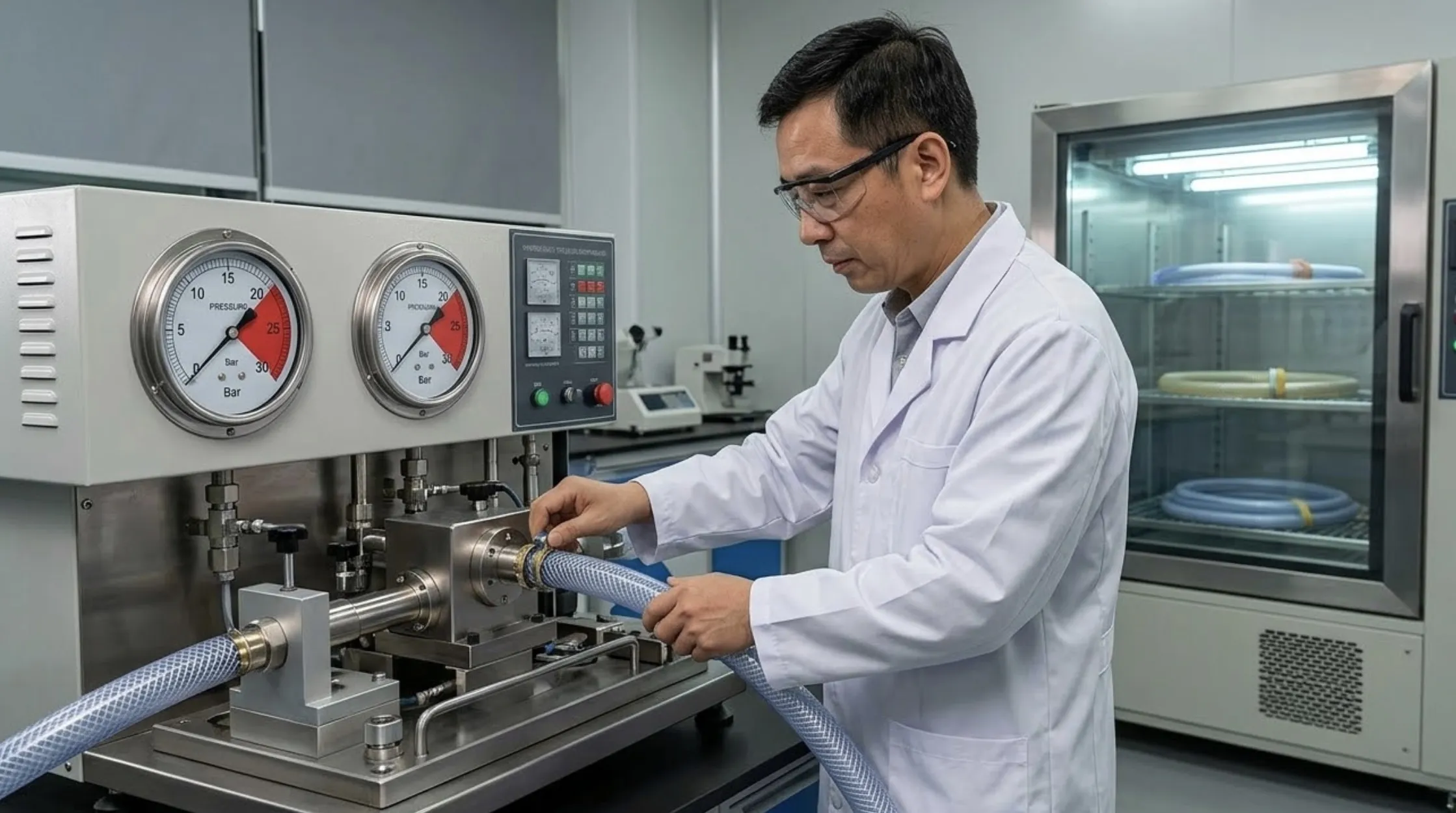
Q4: Do you conduct hydrostatic burst tests on every batch?
Reputable manufacturers test at 2–3× working pressure. Ask for a sample test report.
Q5: What is your shelf life guarantee and storage recommendation?
PVC hoses stored in direct sunlight or heat above 60°C degrade rapidly. A quality supplier will provide written storage guidelines.
4. Understand MOQ, Pricing, and Payment Terms
For Middle East buyers ordering from China, the standard commercial framework is:
| Parameter | Typical Range | Notes |
|---|---|---|
| MOQ | 1,000–5,000 meters per size | Some factories accept mixed-size orders |
| Lead time | 15–30 days after deposit | Increases during Chinese New Year (Jan–Feb) |
| Trade term | FOB Qingdao / FOB Shanghai | CIF available but FOB gives you freight control |
| Payment | 30% TT deposit + 70% before shipment | L/C at sight for large orders (>USD 80,000) |
| Sample cost | USD 50–150 | Usually refunded on first order |
On pricing: A legitimate FOB price for standard 2-inch PVC layflat hose (6 bar, 100 m rolls) from a Chinese manufacturer typically ranges depending on wall thickness and order volume. Quotes significantly below this range usually indicate recycled material or undersized wall thickness.
Negotiation tip for Middle East buyers: If you are buying for multiple markets — UAE, Saudi Arabia, and Egypt simultaneously — consolidate your annual forecast into a single conversation. A combined 50,000-meter annual commitment unlocks better pricing and priority production scheduling than three separate 15,000-meter orders placed independently.
5. Check Certifications Relevant to Middle East Markets
Different end-use applications and destination countries require different certifications:
 Hoses Certification
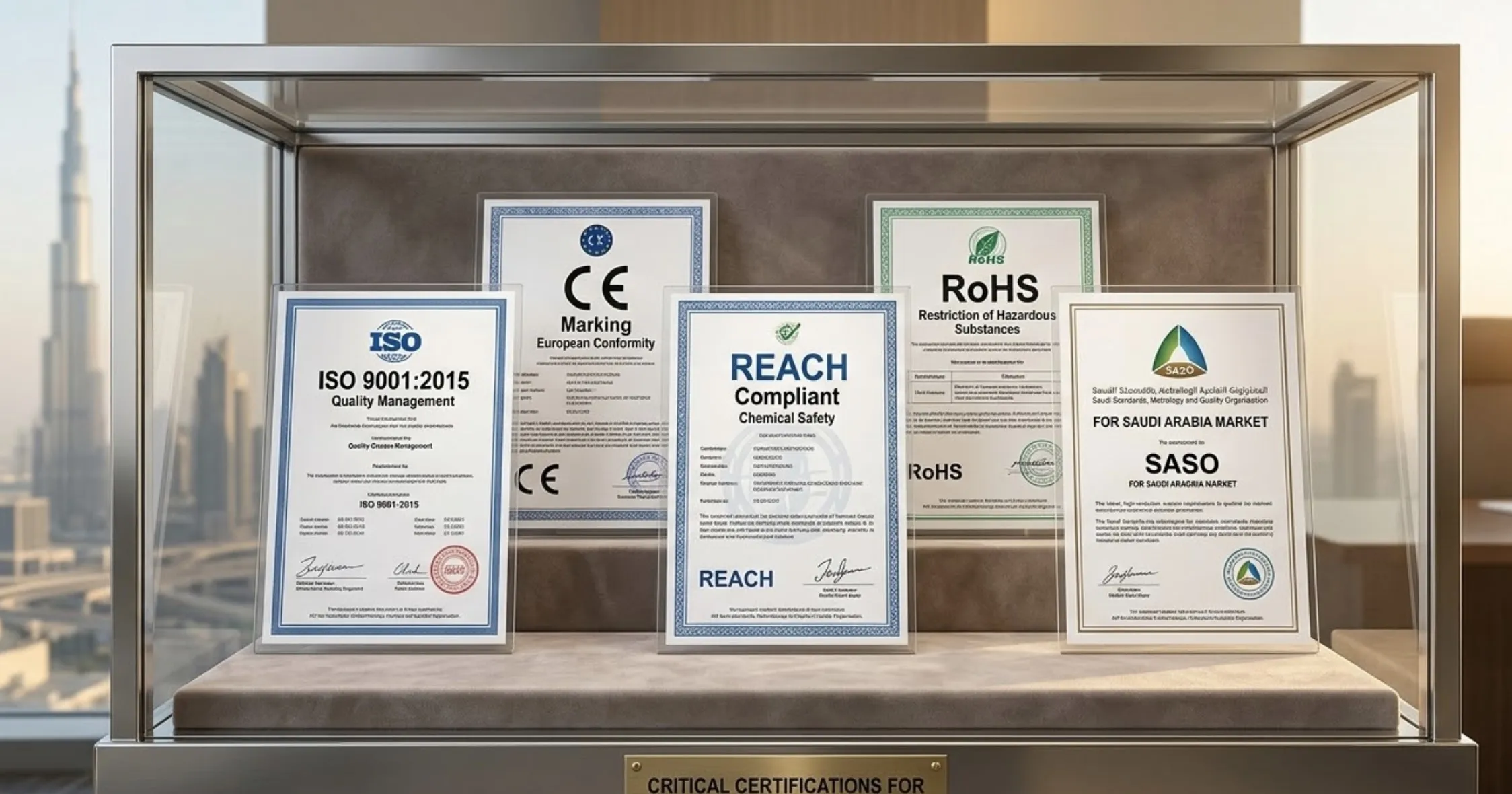
CE marking — required if the hose will be resold into European markets or used in EU-compliant machinery
REACH / RoHS — required for hoses containing plasticizers; Gulf Cooperation Council (GCC) technical regulations increasingly reference these standards
ISO 9001:2015 — confirms the manufacturer has a documented quality management system; request the certificate and verify it on the issuing body's website
Food-grade compliance (FDA 21 CFR / NSF 61) — required for hoses used in potable water, beverage, or food processing applications
SASO (Saudi Standards) — for Saudi Arabia specifically, some hose products require SASO certification for customs clearance
Ask the supplier for original certificate files (PDF), not scanned images of paper certificates. Verify the certificate number directly on the certification body's official website.
6. Assess Communication Quality as a Quality Signal
The way a supplier communicates before the order reflects how they will handle problems after it.
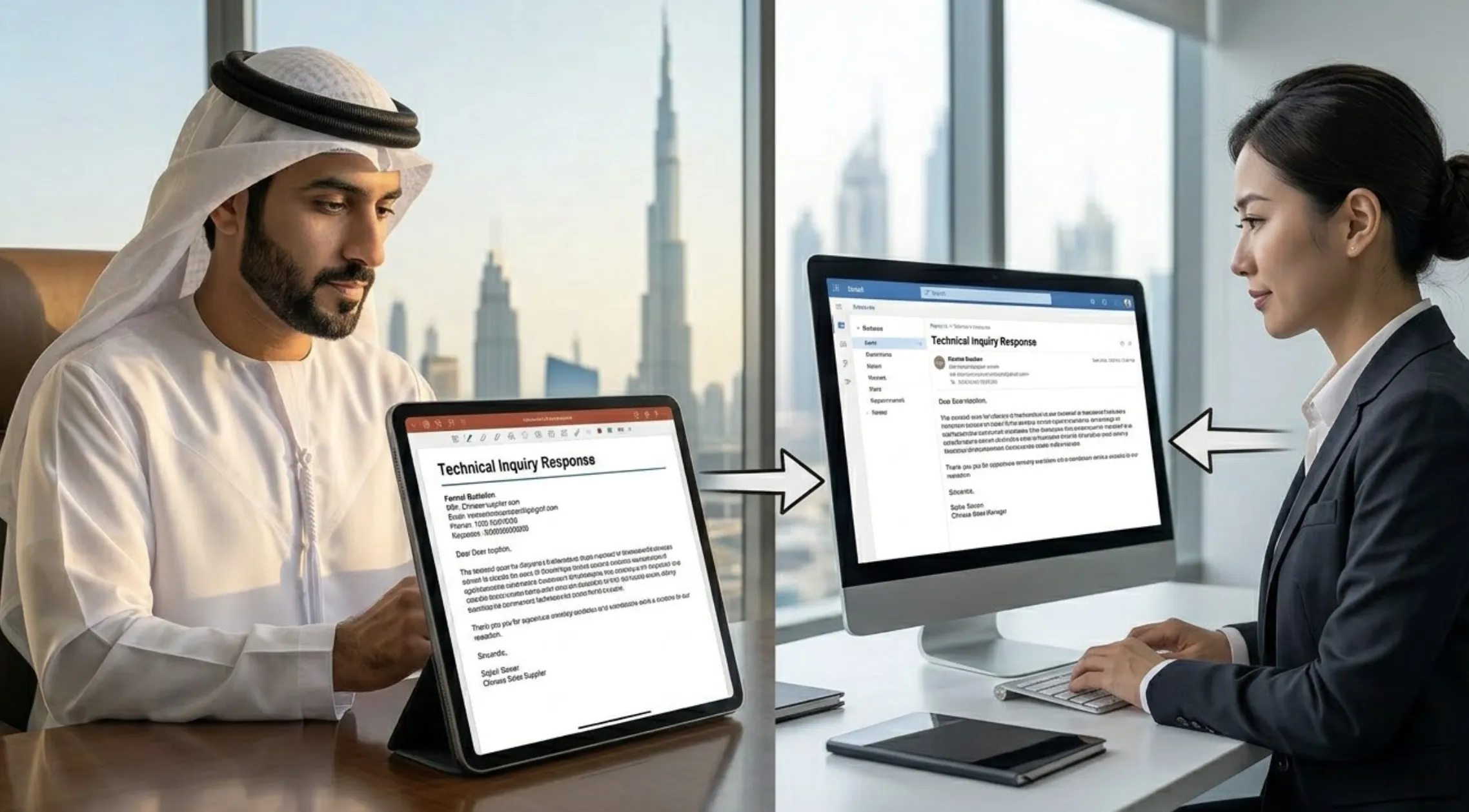 Communication Quality
A reliable Chinese hose manufacturer will:
Respond to technical inquiries within 24 hours on business days
Provide a formal quotation document with itemized specifications, not just a WhatsApp price
Proactively flag potential issues — for example, informing you that a specific wall thickness is not available in your required color
Assign you a dedicated sales contact who maintains consistency across your correspondence
Suppliers who only quote prices without asking about your application, pressure requirements, or environment are not acting as partners — they are acting as order processors. In the Middle East market, where delivery logistics and customs timelines add cost and complexity, you need a supplier relationship, not just a transaction.
7. Request a Physical Sample Before Placing a Bulk Order
No specification document replaces a physical sample. Before committing to a bulk order — especially for a new supplier — always request production samples and conduct your own basic checks:
Flex test: Bend the hose to its minimum bend radius repeatedly. A quality PVC hose should not kink or show stress whitening.
UV exposure: Leave a sample section in direct sunlight for 2–3 weeks. Check for surface chalking or hardening.
Coupling retention test: Connect the hose to a standard BSP or camlock fitting and pressurize to working pressure. Hold for 10 minutes. No leakage should occur at the coupling joint.
Wall thickness measurement: Use a digital caliper to measure wall thickness at three points around the circumference. Variance greater than 0.15 mm indicates inconsistent extrusion.
If you are in the UAE or Saudi Arabia, your freight forwarder can often coordinate sample collection from the Chinese port and consolidate them with other shipments to reduce sample logistics cost.
8. Red Flags to Avoid
Experienced importers recognize these warning signs early:
Cannot provide batch-specific test reports — indicates no in-house QC process
Price drops dramatically after initial negotiation without explanation — suggests they are substituting materials
All communication through personal WeChat only — legitimate manufacturers maintain business email
Pressures you to place order without sample — prioritizes cash flow over relationship quality
Certificate dates are expired or the certificate number doesn't match the company name — document fraud is not uncommon in the industry
Summary: Your Supplier Evaluation Checklist
Before placing your first bulk order with any Chinese PVC hose manufacturer, confirm the following:
Production capability confirmed via video or audit
PVC resin grade and wall thickness specification documented
Third-party test report reviewed for your specific product
ISO 9001 certificate verified on the issuing body's website
Physical sample tested under your local conditions
FOB pricing benchmarked against market range
Payment terms agreed in writing with clear milestone triggers
Dedicated sales contact assigned to business email communication
Frequently Asked Questions
What is the typical MOQ for PVC hose orders from China?
Most Chinese PVC hose manufacturers set a minimum order quantity of 1,000 to 5,000 meters per product specification. Some factories accept mixed-size orders that combine multiple diameters to reach the MOQ threshold.
Is FOB or CIF better for Middle East buyers importing hoses from China?
FOB (Free On Board) gives the buyer control over freight selection and cost, which is generally advantageous for experienced importers who have established freight forwarder relationships. CIF is simpler for first-time importers but typically costs more overall.
How long does it take to receive hose orders from China to UAE or Saudi Arabia?
Production lead time is typically 15–30 days after deposit payment. Sea freight from Qingdao or Shanghai to Jebel Ali (Dubai) takes approximately 18–22 days. Total timeline from order confirmation to port arrival is usually 5–7 weeks.
What certifications should I require from a Chinese hose supplier for the Gulf market?
At minimum, request ISO 9001:2015 and REACH compliance documentation. For hoses used in potable water applications, require NSF 61 or equivalent food-grade certification. For products entering Saudi Arabia, verify whether SASO certification is required for your specific product category.
Related Articles
- How to Choose a PVC Hose Supplier from China: A Practical Guide for Ecuador Importers
- Irrigation Hose Import Guide for South Asia — Bangladesh, Pakistan, Sri Lanka
- PVC Layflat Discharge Hose for Agriculture in Africa: A Complete Buyer's Guide
- PVC Layflat Hose — Product Page
- PVC Steel Wire Suction Hose — Product Page