
How to Calculate Hose Bend Radius?
Understanding how to calculate hose bend radius is essential for anyone working with hydraulic, pneumatic, or industrial hose systems. Improper bending can cause kinks, restricted flow, premature wear, and even catastrophic hose failure. The good news? Calculating bend radius is straightforward once you understand the basics.
Hose Bend Radius Calculator
Calculate the minimum safe bend radius for PVC, rubber, hydraulic, and industrial hoses. Supports SAE 100R1–R13 and general-purpose hoses.
| Hose type | Formula | Typical use | Factor |
|---|---|---|---|
| PVC / Layflat / Rubber (general) | OD × 6 | Irrigation, water transfer, discharge | ×6 |
| SAE 100R1 — single wire braid | ID × 4 | Low-pressure hydraulic lines | ×4 |
| SAE 100R2 — double wire braid | ID × 5 | Medium-pressure hydraulic systems | ×5 |
| SAE 100R12 — four-spiral | ID × 8 | High-pressure hydraulic applications | ×8 |
| SAE 100R13 — six-spiral | ID × 10 | Very high-pressure industrial systems | ×10 |

Hose Bend Radius
What Is Hose Bend Radius?
The hose bend radius is the minimum radius a hose can be bent without causing damage to its internal structure. It is measured from the centerline of the hose to the center of the bend.
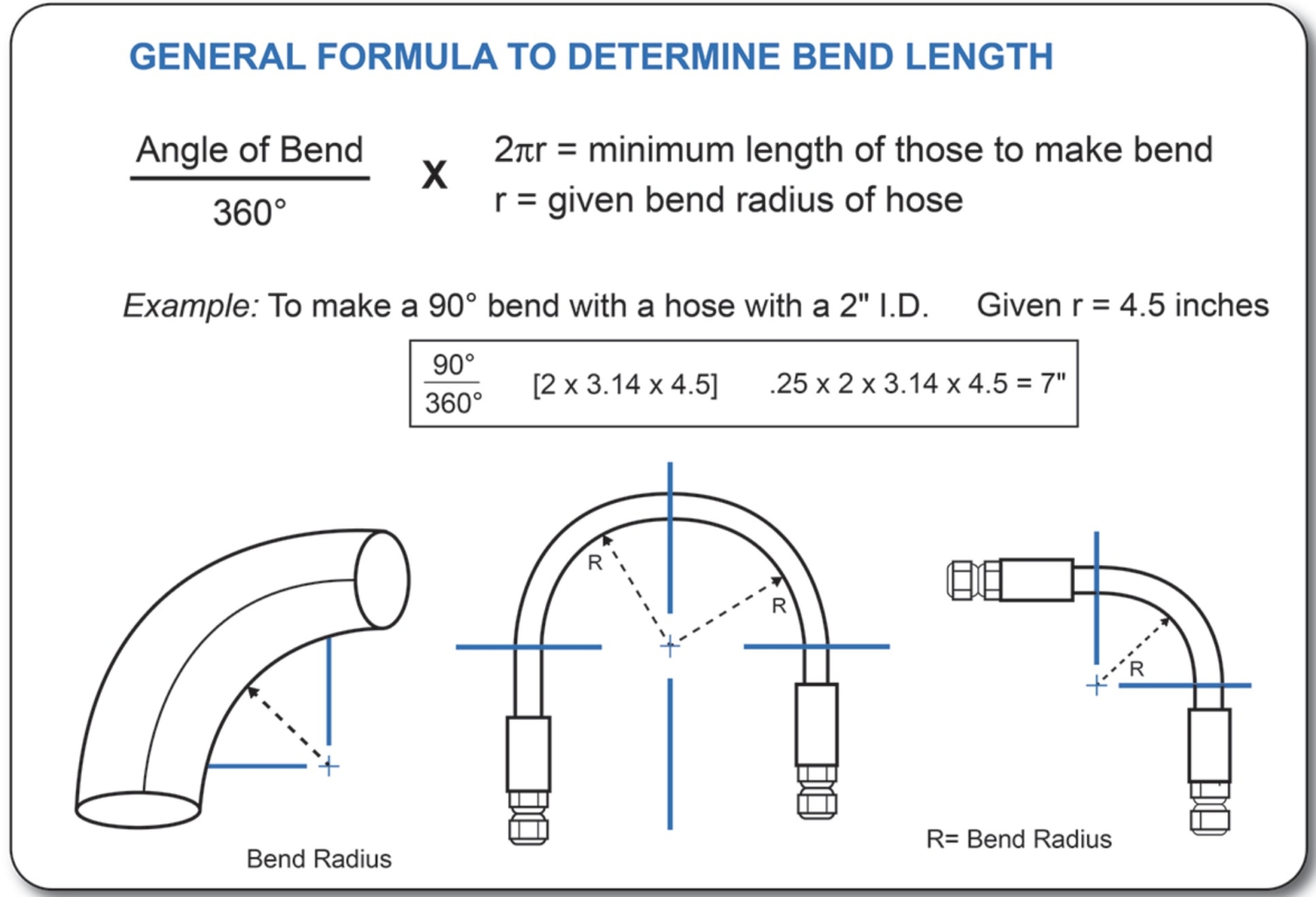
Bend Radius
Every hose has a manufacturer-specified minimum bend radius, which ensures:
-
Proper fluid flow
-
Structural integrity of reinforcement layers
-
Long service life
-
Safe operating conditions
Bending a hose tighter than this radius can lead to internal cracks, collapsed walls, or weakened reinforcement—even if the hose looks fine on the outside.
Why Calculating Hose Bend Radius Is Important
Failing to calculate bend radius correctly can cause serious problems:
-
❌ Reduced flow due to hose collapse
-
❌ Increased pressure drop
-
❌ Premature hose failure
-
❌ Safety hazards and fluid leaks
-
❌ Expensive downtime and repairs
Correct bend radius calculation ensures system reliability, efficiency, and safety, especially in high-pressure hydraulic applications.
How to Calculate Hose Bend Radius (Step-by-Step)
Step 1: Check Manufacturer Specifications
The easiest and most accurate method is to consult the hose datasheet. Manufacturers clearly list the minimum bend radius for each hose size and type.
📌 Always follow manufacturer values first.
Step 2: Use the Diameter-Based Estimation Rule
If manufacturer data is unavailable, you can estimate bend radius using this common industry rule:
Minimum Bend Radius ≈ 6 × Hose Outside Diameter (OD)
Formula
Example
-
Hose outside diameter = 20 mm
-
Bend radius = 20 × 6 = 120 mm
⚠️ This is an approximation. High-pressure or reinforced hoses may require a larger radius.
The most accurate method is to multiply the hose’s Inside Diameter (ID) by a specific flexibility factor (or “bend factor”) provided by the manufacturer for that specific hose series.
Commonly accepted static flexibility factors include :
-
SAE 100R1 (Single braid): 4 X ID
-
SAE 100R2 (Double braid): 5 X ID
-
SAE 100R12 (Four-spiral): 8 X ID
-
SAE 100R13 (Six-spiral): 10 X ID
Because kinking or over-bending can reduce a hose’s service life by over 50%, you should always prioritize the manufacturer’s technical data sheet over general rules of thumb.
Step 3: Measure the Bend Correctly
When installing the hose:
-
Identify the centerline of the hose
-
Measure from the center of the curve to the hose centerline
-
Ensure the radius is greater than or equal to the minimum bend radius
Never measure from the inner or outer edge of the hose.
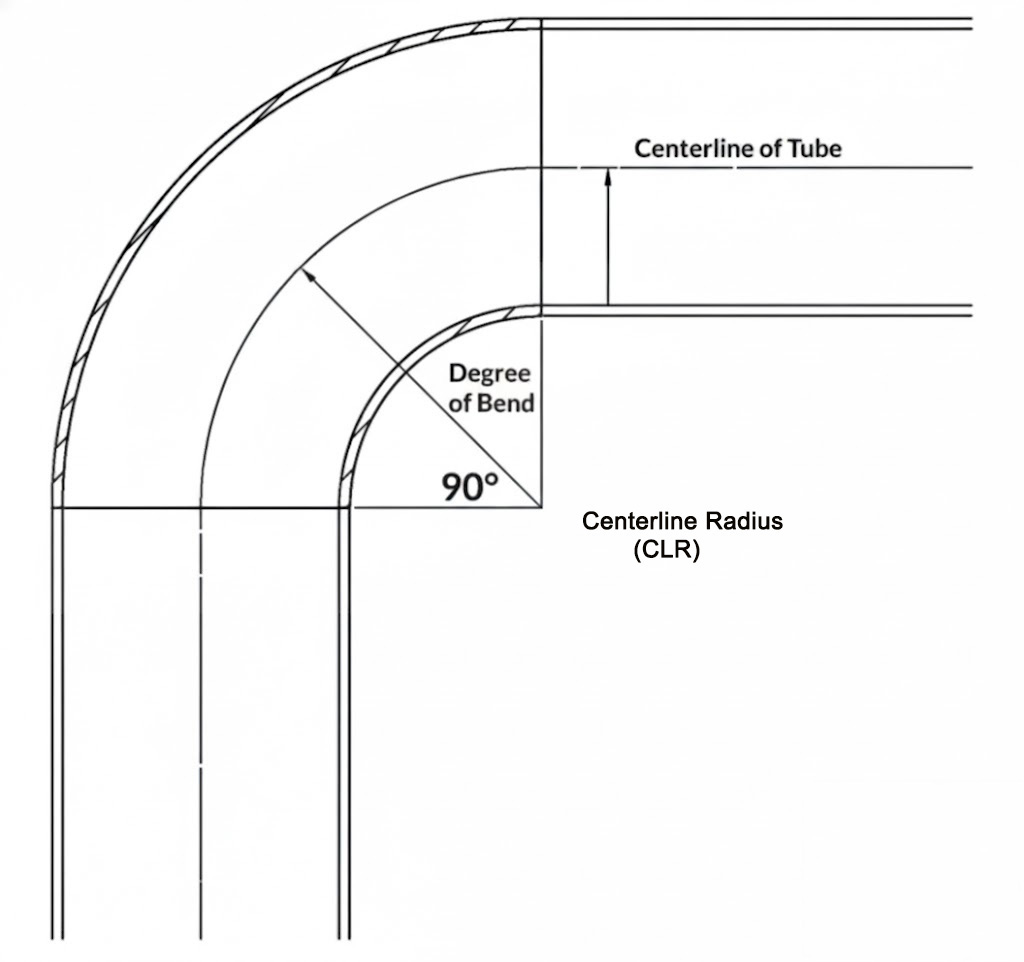
Centerline Radius
Hose Bend Radius vs Bend Diameter
Many people confuse these two terms:
| Term | Definition |
|---|---|
| Bend Radius | Distance from the center of the bend to the hose centerline |
| Bend Diameter | Twice the bend radius |
Formula:
Knowing both helps when designing tight hose routing paths in compact systems.
Factors That Affect Hose Bend Radius
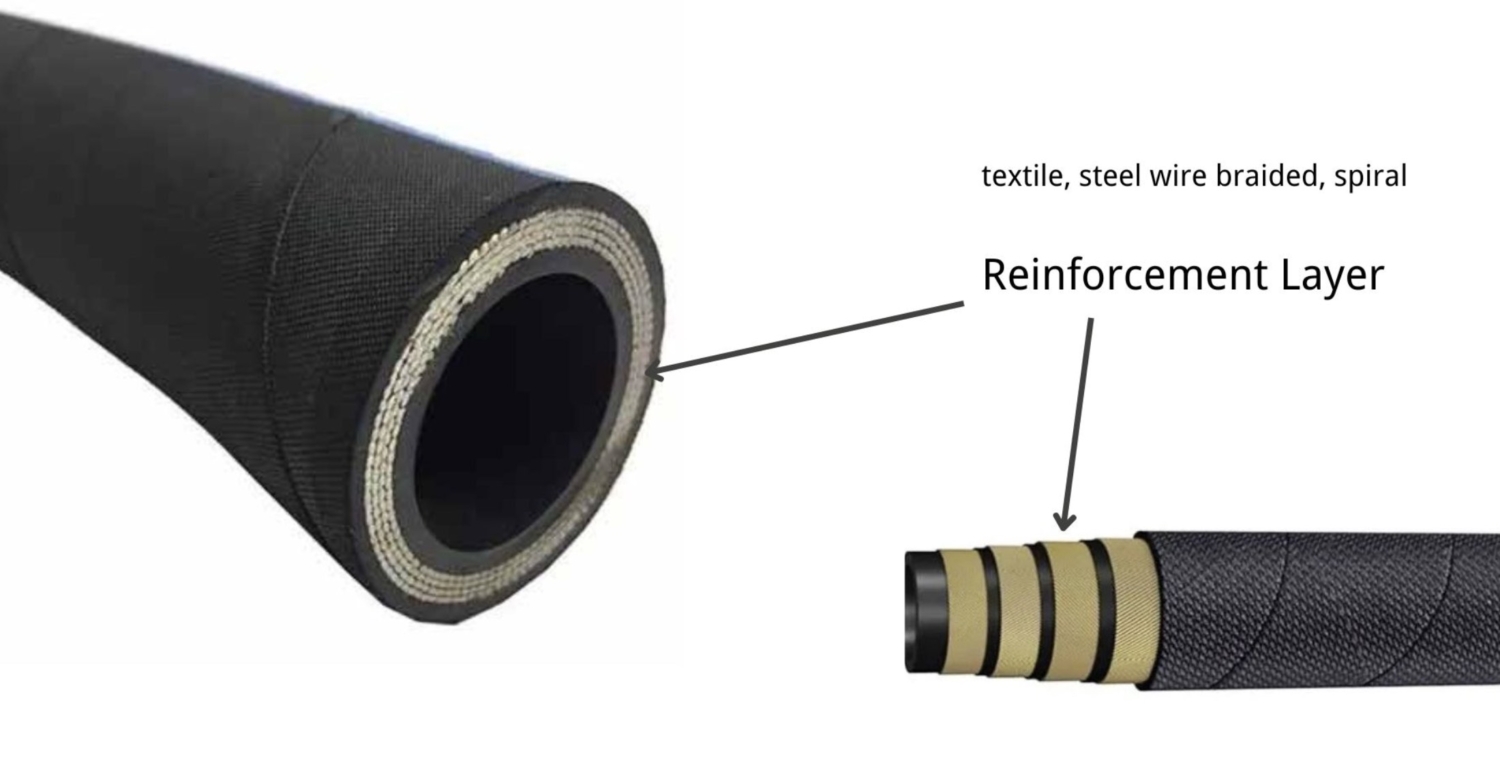
Hydraulic Hose Reinforce Layers
Several factors influence how tightly a hose can bend:
-
Hose diameter – Larger hoses need larger bend radii
-
Pressure rating – Higher pressure = larger minimum radius
-
Reinforcement type – Steel braid or spiral reinforcement is stiffer
-
Temperature – Cold hoses require larger bend radii
-
Motion – Dynamic applications need extra bend allowance
Always increase the bend radius in moving or vibrating systems.
Common Mistakes to Avoid
-
Bending hoses directly at fittings
-
Exceeding the minimum bend radius during installation
-
Ignoring movement during operation
-
Using zip ties or clamps that force sharp bends
-
Assuming all hoses have the same bend radius
These mistakes drastically shorten hose lifespan.
Best Practices for Hose Routing
-
✅ Use angled fittings instead of forcing bends
-
✅ Add bend restrictors when needed
-
✅ Leave slack for movement
-
✅ Route hoses in smooth, gradual curves
-
✅ Recheck bend radius after pressurization
Proper routing is just as important as correct calculation.
Frequently Asked Questions (FAQs)
What happens if a hose is bent too tightly?
The hose may kink internally, restrict flow, weaken reinforcement layers, and fail prematurely—even if no damage is visible.
Is hose bend radius the same for all hoses?
No. Bend radius varies by hose type, size, pressure rating, and manufacturer.
Can I exceed the minimum bend radius slightly?
Yes. Exceeding (making it larger) is always safe. Going below it is not.
Does temperature affect hose bend radius?
Yes. Cold temperatures make hoses stiffer, increasing the required bend radius.
Should bend radius be measured before or after installation?
Both. Always confirm after installation and under operating conditions.
Do moving hoses need a larger bend radius?
Yes. Dynamic applications require additional bend allowance to prevent fatigue.
Conclusion
Knowing how to calculate hose bend radius is critical for safe, efficient, and long-lasting hose installations. Whether you’re working with hydraulic systems, industrial machinery, or fluid transfer lines, following bend radius guidelines prevents failures and saves costs.
Always rely on manufacturer specifications when available, use diameter-based calculations as a backup, and design hose routing with smooth, gradual bends. A properly calculated bend radius keeps your system running safely and efficiently for years.
 Like Us on Facebook
 Follow Us on Twitter
 Follow Us on Instagram
 Follow Us on Linkedin
 sunhose
 sunhose