
PVC Steel Wire Hose Vacuum Rating & Bend Radius Guide: The Ultimate Practical Handbook (2026)
PVC steel wire hoses are widely used across industries where flexibility, transparency, and structural strength are required. They combine soft PVC with a rigid steel wire helix, allowing the hose to resist collapse under suction while remaining flexible.
What Is a PVC Steel Wire Hose?
A PVC steel wire hose is a transparent or semi-transparent hose reinforced with an embedded steel spiral. This design allows visual flow inspection while providing excellent resistance to vacuum pressure.
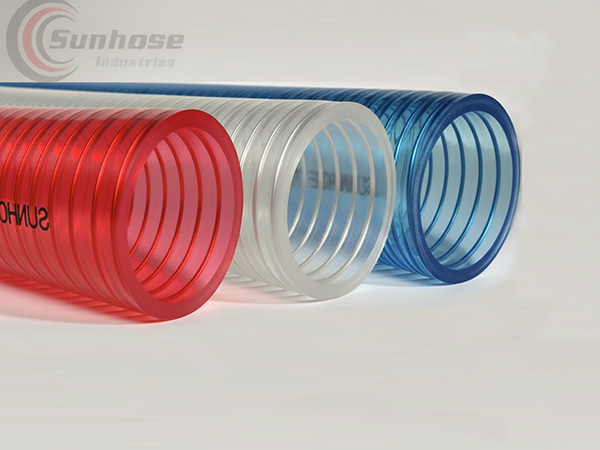
different color of pvc steel wire hose
Key Materials and Construction
-
Inner layer: Smooth PVC for low friction
-
Reinforcement: High-tensile steel wire helix
-
Outer layer: Flexible PVC for abrasion resistance
Why Vacuum Rating Matters
Vacuum rating determines how much negative pressure a hose can withstand without collapsing.
Definition of Vacuum Rating
Vacuum rating is the maximum suction pressure a hose can safely handle, usually expressed in inches of mercury (inHg).
Positive Pressure vs Vacuum Pressure
Unlike pressure hoses that expand outward, vacuum hoses face inward force. Without proper reinforcement, collapse is inevitable.
How Vacuum Rating Is Measured
Inches of Mercury (inHg) Explained
Most PVC steel wire hoses are rated between 18 inHg to 29 inHg, with heavy-duty models approaching full vacuum.
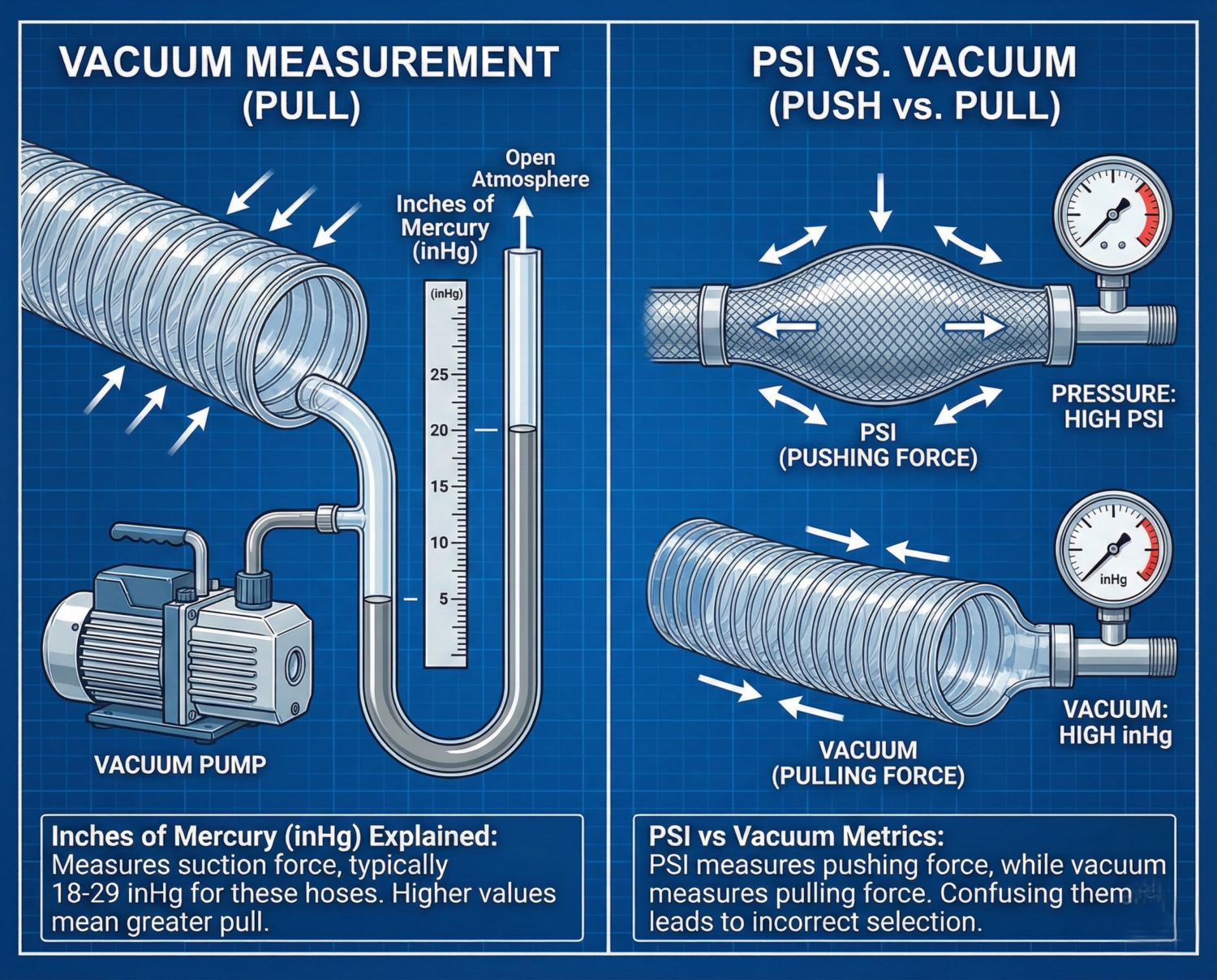
Vacuum Rating Testing
PSI vs Vacuum Metrics
While PSI measures pushing force, vacuum ratings measure pulling force. Confusing the two can result in incorrect hose selection.
Typical Vacuum Ratings of PVC Steel Wire Hoses
Light-Duty vs Heavy-Duty Ratings
-
Light-duty: Up to 18 inHg
-
Medium-duty: 18–25 inHg
-
Heavy-duty: 25–29 inHg
Industry Standards and Testing
Manufacturers test hoses under controlled conditions to ensure collapse resistance and safety compliance.
Bend Radius Explained
What Is Bend Radius?
Bend radius is the minimum curve a hose can make without kinking or restricting flow.
Minimum vs Recommended Bend Radius
-
Minimum bend radius: Tightest allowable bend
-
Recommended bend radius: Ensures long service life and optimal performance
Why Bend Radius Is Critical
Flow Efficiency and Kink Prevention
Exceeding the bend radius reduces internal diameter, lowering flow efficiency and increasing wear.
Hose Lifespan and Safety
Repeated over-bending weakens PVC and deforms the steel wire, leading to premature failure.
Factors Affecting Vacuum Rating and Bend Radius
Hose Diameter and Wall Thickness
Larger diameters generally require thicker walls and stronger reinforcement to maintain vacuum rating.
Temperature and Environmental Conditions
Cold temperatures reduce PVC flexibility, increasing bend radius requirements.
Reinforcement Wire Pitch
Closer wire spacing improves vacuum resistance but reduces flexibility.
Common Applications
Industrial Vacuum Systems
Used for dust extraction, material handling, and pneumatic conveying.
Agriculture and Irrigation
Ideal for grain suction, fertilizer transfer, and water pumping.
Food, Chemical, and Marine Uses
Food-grade versions support liquid transfer, while chemical-resistant models handle mild acids and alkalis.
Selection Guide: Choosing the Right Hose
Matching Vacuum Rating to Application
Always select a hose rated above your system’s maximum vacuum demand.
Choosing the Correct Bend Radius
Plan routing paths in advance to avoid tight corners that exceed the hose’s limits.
Installation Best Practices
Avoiding Over-Bending
Use elbows or rigid supports where sharp turns are unavoidable.
Proper Support and Routing
Support long hose runs to prevent sagging and uneven stress distribution.
Maintenance and Inspection Tips
Signs of Vacuum Failure
-
Flattened hose walls
-
Reduced flow rate
-
Visible wire deformation
Storage Recommendations
Store hoses straight, away from direct sunlight and extreme temperatures.
Frequently Asked Questions (FAQs)
Q1. What is the maximum vacuum rating for PVC steel wire hoses?
Most heavy-duty models can handle up to 29 inHg, close to full vacuum.
Q2. Does a smaller bend radius reduce hose life?
Yes, tighter bends accelerate wear and increase collapse risk.
Q3. Can PVC steel wire hoses handle pressure and vacuum?
Some models can, but always check manufacturer specifications.
Q4. How does temperature affect bend radius?
Lower temperatures increase stiffness, requiring a larger bend radius.
Q5. Are transparent PVC steel wire hoses safe for food use?
Only food-grade certified versions should be used in food applications.
Q6. How often should vacuum hoses be inspected?
Inspect monthly in industrial environments or before critical operations.
Conclusion
Understanding vacuum rating and bend radius is essential for safe and efficient hose performance. This PVC Steel Wire Hose Vacuum Rating & Bend Radius Guide helps engineers, technicians, and buyers make informed decisions, reduce downtime, and extend hose lifespan. By selecting the correct specifications and following best practices, you ensure reliability in even the most demanding vacuum applications.
 Like Us on Facebook
 Follow Us on Twitter
 Follow Us on Instagram
 Follow Us on Linkedin
 sunhose
 Sunhose