
What is Clear Reinforced PVC Hose?
Introduction
Have you ever noticed those transparent, flexible hoses used in industries, farms, or even around the house? That’s what we call a clear reinforced PVC hose. It’s basically a transparent plastic tube that’s been strengthened with a reinforcement layer, making it both strong and versatile. Thanks to its durability, cost-effectiveness, and ability to handle a wide range of liquids, it has become one of the most widely used hoses across industries.
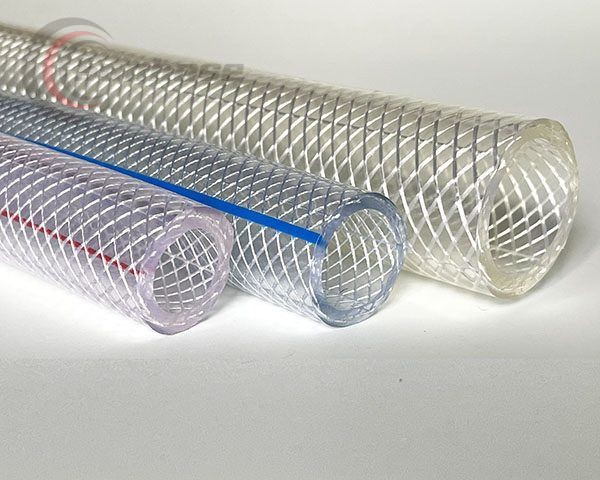
clear reinforced pvc hose
Understanding PVC as a Material
PVC (Polyvinyl Chloride) is one of the most popular thermoplastics in the world. It’s known for being tough, flexible, and affordable. Unlike some plastics, PVC can be made rigid or soft depending on how it’s processed. When it comes to hoses, flexible PVC is the hero—it bends without breaking and can withstand repeated use without wearing out quickly.
Compared to rubber or silicone, PVC is lighter, easier to manufacture, and generally more budget-friendly. This makes it a go-to choice for reinforced hoses.
Structure of Clear Reinforced PVC Hose
A reinforced PVC hose isn’t just a single layer of plastic—it’s built like a sandwich:
-
Inner Tube: Made of smooth, clear PVC for safe and clean liquid transfer.
-
Reinforcement Layer: Usually polyester yarn, giving the hose strength and pressure resistance.
-
Outer Layer: A transparent PVC cover that protects against wear, weather, and UV damage.
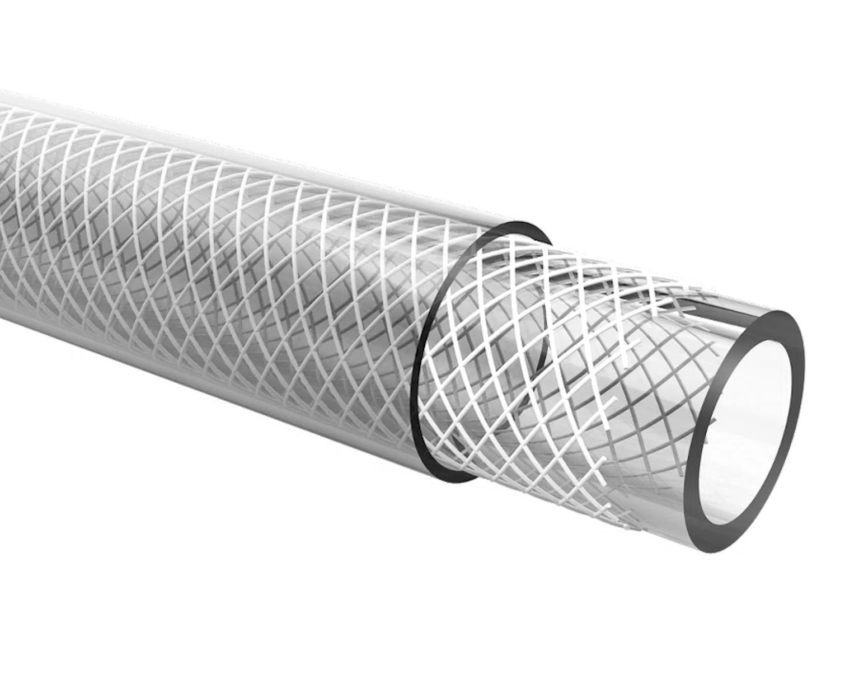
clear reinforced hose structure shown in diagram
This three-layer structure ensures that the hose remains flexible while still being strong enough to resist kinks and pressure bursts.
Key Features of Clear Reinforced PVC Hose
-
Transparency: You can actually see the liquid flow, making it easy to detect blockages or contamination.
-
Flexibility: It bends easily without collapsing.
-
Durability: Resistant to abrasion, impact, and weathering.
-
Lightweight: Easy to carry and install compared to rubber hoses.
Different Types of Reinforcement
Not all reinforced PVC hoses are the same. The reinforcement type depends on the application:
-
Polyester Yarn Reinforcement: Common in general-purpose hoses, strong and flexible.
-
Steel Wire Reinforcement: Adds extra strength for suction and discharge applications.
-
Spiral Reinforcement: Designed for higher pressure resistance and industrial use.
Benefits of Using Clear Reinforced PVC Hose
Why do so many industries choose PVC hoses? Here’s why:
-
Easy Flow Monitoring: Transparency lets you see what’s going on inside.
-
Resistant to Kinks: Thanks to reinforcement, it won’t easily collapse.
-
Cost-Effective: Cheaper than rubber or silicone alternatives.
-
Versatile: Suitable for liquids, gases, and even light powders.
Common Applications
Clear reinforced PVC hoses show up almost everywhere:
-
Food and Beverage: For milk, juice, beer, or water transfer.
-
Medical and Pharmaceutical: Used in labs and for transferring sterile liquids.
-
Industrial: For chemicals, oils, and solvents.
-
Agriculture: Irrigation, spraying, and water supply.
-
Household: Garden watering, aquarium piping, and DIY projects.
Comparison with Other Hose Materials
-
PVC vs. Rubber: PVC is lighter and cheaper, while rubber is more heat resistant.
-
PVC vs. Silicone: Silicone handles extreme heat better but costs more.
-
PVC vs. Polyurethane: PU hoses are more abrasion-resistant, but PVC is more flexible and cost-efficient.
Temperature and Pressure Ratings
Most reinforced PVC hoses can handle temperatures between -10°C to +60°C (14°F to 140°F). Pressure ratings depend on thickness and reinforcement but generally range from 2 bar to 10 bar. For higher pressure, steel-wire reinforced PVC hoses are preferred.
Chemical Resistance of PVC Hose
PVC hoses are resistant to many acids, alkalis, and salts. However, they’re not ideal for strong solvents, hydrocarbons, or very high temperatures. Always check compatibility before use.
Safety and Compliance
For food and medical use, look for hoses labeled food-grade or FDA-approved. These ensure that the material is safe for drinking water, beverages, and other consumables.
Environmentally, PVC isn’t perfect, but many manufacturers now produce phthalate-free, eco-friendly versions.
Choosing the Right Hose for Your Needs
When selecting a reinforced PVC hose, consider:
-
Diameter & Length: To match your system requirements.
-
Pressure Rating: Ensure it meets your application’s pressure needs.
-
Temperature & Chemical Compatibility: Especially for industrial or food use.
Maintenance Tips
To extend the life of your hose:
-
Clean Regularly: Especially after transferring food or chemicals.
-
Store Properly: Keep in a cool, dry place, away from sunlight.
-
Inspect Often: Look for cracks, stiffness, or discoloration—signs it’s time to replace.
Future of PVC Hose Technology
The hose industry is evolving, with a growing push for eco-friendly materials and recyclable PVC. Manufacturers are experimenting with biodegradable additives and advanced reinforcements for higher durability and sustainability.
Conclusion
A clear reinforced PVC hose is more than just a plastic tube—it’s a versatile, durable, and affordable solution for countless applications. From industries to households, it plays a vital role in moving liquids safely and efficiently. By understanding its structure, features, and applications, you’ll know exactly why it’s such a trusted choice worldwide.
FAQs
1. Is clear reinforced PVC hose safe for drinking water?
Yes, if it’s labeled food-grade or FDA-approved.
2. How long does PVC hose last?
Typically 3–5 years, depending on use and care.
3. Can PVC hose handle hot liquids?
Yes, but only up to about 60°C (140°F). Beyond that, it softens and loses strength.
4. What is the difference between food-grade and standard PVC hose?
Food-grade hoses are made with safer additives and meet strict regulations, while standard hoses may contain chemicals unsuitable for consumption.
5. Can reinforced PVC hose be recycled?
Yes, but it requires specialized recycling due to the reinforcement layer.
 Like Us on Facebook
 Follow Us on Twitter
 Follow Us on Instagram
 Follow Us on Linkedin
 sunhose
 sunhose