
Layflat Hoses Decoded: Why PVC, Rubber, and TPU Cater to Different Needs
Layflat hoses are essential tools for water transfer in agricultural, industrial, and firefighting applications. While they share a similar flat-when-empty design, materials like PVC, Rubber, and TPU create significant performance differences. Here’s a detailed comparison:
1. Material Composition
-
PVC Layflat Hose:
Made from Polyvinyl Chloride (PVC) reinforced with polyester mesh.
Contains plasticizers for flexibility.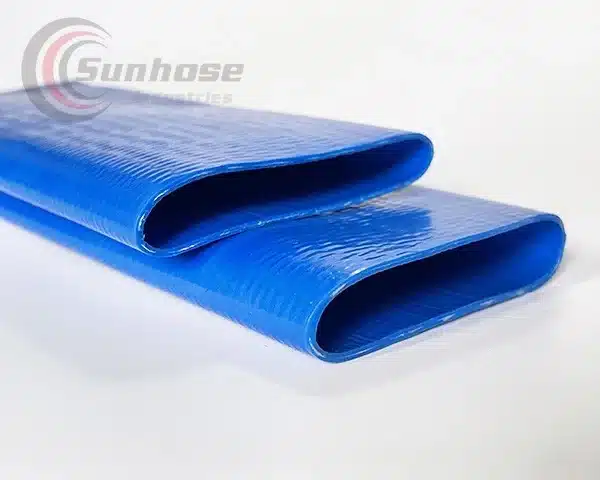
-
Rubber Layflat Hose:
Constructed with synthetic rubber (often EPDM or NBR) and embedded fabric layers.
Rubber Layflat Hose
-
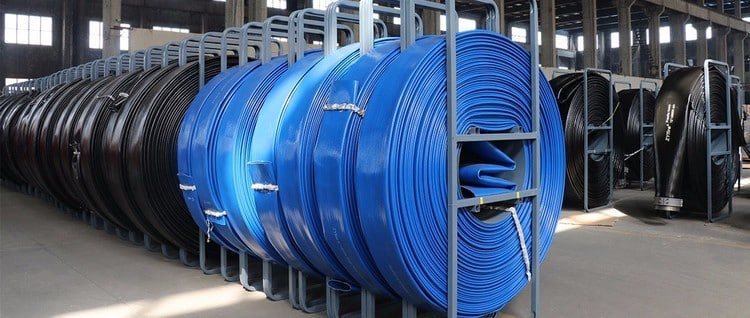
TPU Layflat Hose:
Uses Thermoplastic Polyurethane (TPU) with high-tensile textile reinforcement.
Tpu layflat hose

2. Durability & Lifespan
| Property | PVC Hose | Rubber Hose | TPU Hose |
|---|---|---|---|
| Abrasion Resistance | Moderate | High | Excellent |
| Puncture Resistance | Low-Moderate | High | Very High |
| UV Resistance | 6-12 months | 2-5 years | 3-7 years |
| Typical Lifespan | 2-3 years | 5-8 years | 4-10 years |
3. Performance Characteristics
Temperature Tolerance
-
PVC: -5°C to +60°C (becomes brittle in freezing temps)
-
Rubber: -40°C to +90°C
-
TPU: -50°C to +125°C
Chemical Resistance
-
PVC: Resists acids/alcohols; degrades with oils/solvents
-
Rubber: Excellent oil/fuel resistance (NBR type)
-
TPU: Superior resistance to oils, greases, and hydrocarbons
Flexibility
-
PVC: Stiffens in cold weather
-
Rubber: Remains flexible but heavier
-
TPU: Maintains flexibility across temperatures
4. Operational Advantages
PVC Hoses
✓ Lowest cost option
✓ Lightweight (0.8-1.2 kg/m)
✓ Good for short-term irrigation
Rubber Hoses
✓ Handles high pressure (up to 25 bar)
✓ Fire-resistant versions available
✓ Suitable for oil/fuel transfer
TPU Hoses
✓ Ultra-lightweight (0.6-1.0 kg/m)
✓ Kink-resistant design
✓ FDA-compliant options for food-grade uses
Application Recommendations
-
Agriculture: PVC for seasonal irrigation, TPU for permanent installations
-
Construction: Rubber for dewatering/abrasive slurries
-
Firefighting: Rubber for high heat/oil resistance
-
Food Processing: TPU with FDA certification
-
Mining: TPU for chemical resistance and durability
Environmental Considerations
-
PVC: Contains chlorine; harder to recycle
-
Rubber: More energy-intensive production
-
TPU: Fully recyclable; some biodegradable options
Conclusion
While PVC hoses remain popular for budget-conscious users, TPU offers superior longevity in harsh conditions. Rubber continues to dominate high-pressure/high-temperature scenarios. The optimal choice depends on specific requirements for chemical exposure, temperature range, and intended service life. Recent industry surveys show TPU adoption growing 18% annually, reflecting its balance of performance and lightweight advantages.
 Like Us on Facebook
 Follow Us on Twitter
 Follow Us on Instagram
 Follow Us on Linkedin
 Sunhose
 Sunhose