
PVC Steel Wire Reinforced Hose steps in, transforming a basic polymer tube into a robust industrial workhorse. Much like texturing enhances an injection-molded part’s function, steel wire reinforcement fundamentally upgrades a hose’s performance envelope.
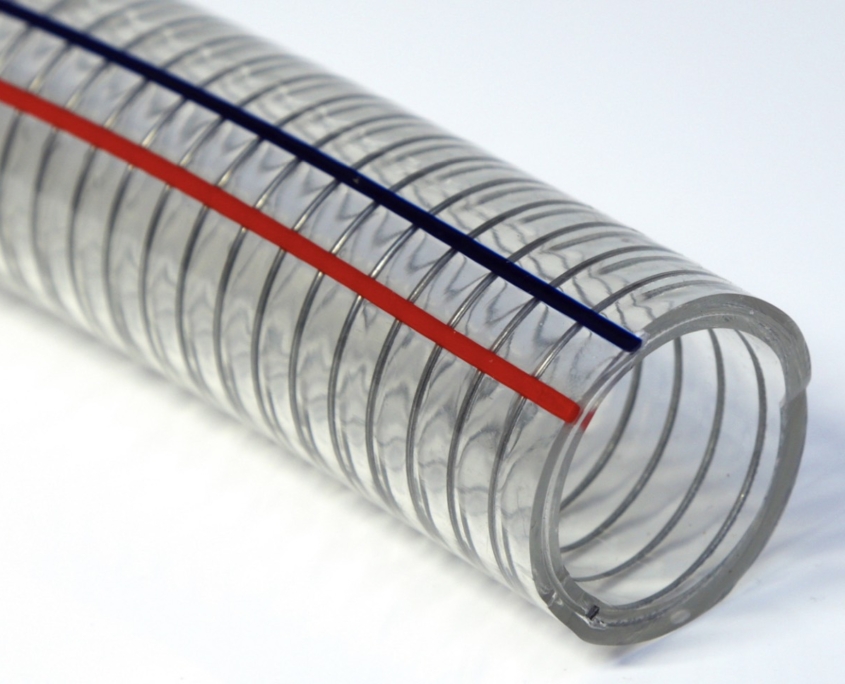
PVC Steel Wire Reinforced Hose
Why Reinforcement? The Core Challenge
Unreinforced PVC hoses have inherent limitations:
-
Pressure Vulnerability: Internal pressure causes expansion, weakening the hose walls and risking bursts.
-
Vacuum Collapse: Suction applications can cause the hose to flatten or kink, blocking flow.
-
Kinking and Deformation: Bending or crushing easily compromises the flow path.
-
Limited Length Support: Longer hoses sag excessively without internal support.
-
Abrasion Weakness: External wear can quickly breach the single layer.
Steel wire reinforcement solves these problems by providing crucial tensile strength, crush resistance, and shape memory.
The Anatomy of Strength: How Steel Wire Reinforcement Works
The magic lies in the integration of high-tensile steel wire within the hose structure, typically applied in one of two configurations:
-
Helical Wire Reinforcement:
-
Structure: A single continuous steel wire is spiraled (like a helix) along the length of the inner PVC tube.
-
Function: Primarily provides collapse resistance under vacuum and prevents kinking during bending. Excellent for suction applications (transferring liquids, powders, granules) and situations where the hose needs to hold its shape during movement. Offers moderate pressure support.
-
-
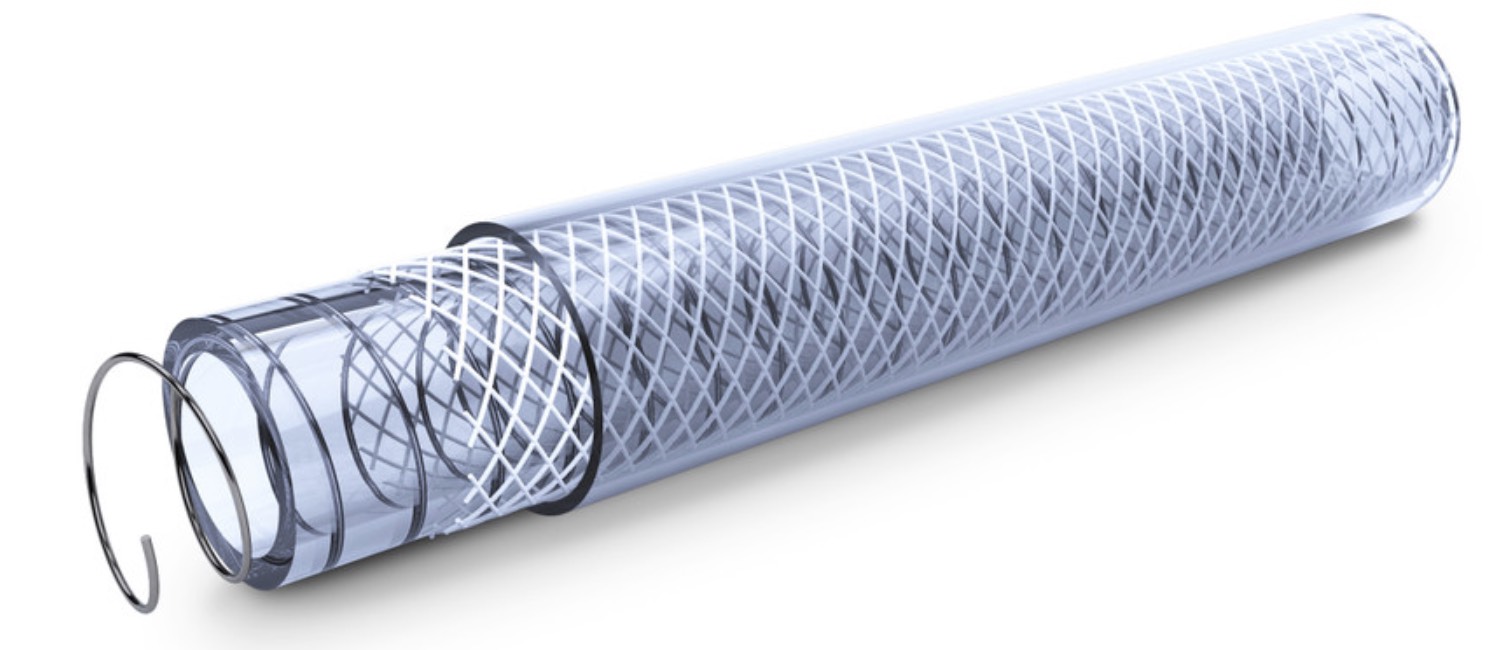
Braided Wire Reinforcement:
-
Structure: Multiple strands of steel wire are woven (braided) over the inner PVC tube in one or more layers, creating a mesh-like cage.
-
Function: Provides exceptional high-pressure resistance by containing the outward force of the fluid. Also significantly enhances tensile strength (resistance to pulling forces) and crush resistance. Offers good kink resistance and shape retention. Common for compressed air, water blasting, paint spray, and high-pressure fluid transfer.

double reinforcement suction and delivery hose
-
(Optional: Visual Comparison Table)
| Feature | Unreinforced PVC | Helical Wire PVC | Braided Wire PVC (1-2 Layers) |
|---|---|---|---|
| Max Pressure | Very Low | Low – Medium | Medium – Very High |
| Vacuum Suction | Poor | Excellent | Good |
| Kink Resistance | Poor | Good | Very Good |
| Tensile Strength | Low | Medium | High – Very High |
| Crush Resistance | Low | Medium | High |
| Shape Retention | Poor | Good | Excellent |
| Flexibility | High | Moderate | Moderate – Stiff |
Key Advantages of PVC Steel Wire Reinforced Hoses:
-
High Pressure Handling: Safely convey compressed air, water, oils, and chemicals at pressures far exceeding unreinforced hose limits. Braided designs are particularly potent here.
-
Superior Vacuum Performance: Helical wire hoses excel in suction lines for pumps, vacuums, and material transfer without collapsing.
-
Exceptional Durability & Longevity: The steel wire protects against internal stresses, external abrasion, and crushing impacts, significantly extending service life in tough environments.
-
Kink Resistance: Maintains an open flow path even during tight bends and movement, reducing flow restrictions and downtime.
-
Shape Memory: Tends to return to its original shape after bending or compression, preventing permanent deformation and flow blockages.
-
Lightweight Strength: Compared to full rubber or metal alternatives, PVC steel wire hoses offer an excellent strength-to-weight ratio.
-
Chemical Resistance: Retains PVC’s inherent resistance to many oils, chemicals, acids, and alkalis (compatibility depends on specific PVC compound).
-
Cost-Effectiveness: Provides a robust solution at a lower cost than many rubber or thermoplastic hoses with similar pressure ratings.
Material Matters: PVC Compounds and Wire Quality
-
PVC: The base polymer can be formulated for specific needs:
-
Standard PVC: Good general chemical resistance, flexibility.
-
UV Stabilized PVC: Essential for outdoor applications to prevent degradation from sunlight.
-
Specialty Compounds: Oil-resistant PVC, food-grade PVC (requiring relevant certifications), or low-temperature PVC for cold environments.
-
-
Steel Wire: High-tensile strength galvanized steel wire is standard, offering corrosion resistance. For highly corrosive environments, stainless steel wire reinforcement is available as a premium option.
Selecting the Right PVC Steel Wire Reinforced Hose: Key Considerations
-
Application: What is the primary use? (High pressure air? Vacuum suction? Water jetting? Chemical transfer? Abrasive material handling?)
-
Pressure Rating (PSI/Bar): Maximum working pressure required. Always select a hose rated significantly higher than your maximum operating pressure (safety factor).
-
Vacuum Rating (in Hg/Bar): If used for suction, what level of vacuum must it withstand?
-
Fluid Compatibility: What liquid, gas, or solid will flow through it? Ensure PVC compound compatibility (check chemical resistance charts).
-
Temperature Range: Minimum and maximum operating temperatures the hose will experience.
-
Diameter (ID) & Length: Required for proper flow rates and reach.
-
Reinforcement Type: Does the application demand high pressure (Braided) or vacuum/kink resistance (Helical)? Some hoses combine both.
-
Environmental Factors: Exposure to sunlight (UV), ozone, abrasion, extreme temperatures, or chemicals?
-
End Fittings: What type of couplings or fittings are needed for connection?
Maximizing Performance and Lifespan: Best Practices
-
Never Exceed Ratings: Respect the specified maximum working pressure, vacuum, and temperature limits.
-
Avoid Abrasion: Route hoses away from sharp edges or abrasive surfaces. Use hose protectors or sleeves where necessary.
-
Prevent Kinking: Use proper bend radii. Avoid sharp bends that can damage the wire and inner tube.
-
Proper Storage: Coil loosely and store in a cool, dry, dark place away from ozone sources (like motors).
-
Regular Inspection: Check for signs of wear, cracking, blistering, exposed wire, or damage to fittings. Replace damaged hoses immediately.
-
Correct Installation: Ensure fittings are properly crimped or attached according to manufacturer specs. Avoid twisting during installation.
Conclusion: The Engineered Solution for Demanding Tasks
 Like Us on Facebook
 Follow Us on Twitter
 Follow Us on Instagram
 Follow Us on Linkedin
 Sunhose