
Twin Welding Hose: A Complete Guide to Understanding Its Importance in Welding
In the world of welding, the tools you use are just as important as the skills you possess. Among the essential tools, the twin welding hose plays a crucial role. It’s the unseen hero that safely carries gases like oxygen and acetylene, enabling you to make precise welds. Whether you’re an experienced welder or just starting out, understanding the functionality and importance of a twin welding hose can make a significant difference in your work’s efficiency and safety.
But what exactly is a twin welding hose, and why is it such an important component in the welding process? Let’s dive into the details!
What is a Twin Welding Hose?
A twin welding hose is a specialized hose used in the welding industry to carry two different gases—usually oxygen and acetylene—to a welding torch. The design of the hose consists of two separate channels or tubes that allow each gas to flow independently but through the same hose. This enables the welder to mix the gases at the torch for various welding applications.
The twin welding hose is not just any ordinary hose. It’s engineered to withstand high pressures and exposure to flame and heat, ensuring that your welding job is both effective and safe.

twin welding hoses
Components of Twin Welding Hose
A typical twin welding hose is composed of several key components:
Outer Covering Material
The outer layer of the hose is made from durable materials such as rubber, PVC, or synthetic compounds. This covering ensures that the hose is resistant to abrasions, UV damage, and weathering. It also provides some degree of flame resistance, especially in the case of rubber hoses.
Inner Lining
The inner layer is typically made from rubber or synthetic materials that are designed to be compatible with gases. This lining ensures that the gases are not contaminated and flow freely without risk of leakage or degradation of the hose.
Two Hose Tubes
The primary feature of a twin welding hose is the presence of two separate tubes. One tube is designated for oxygen, and the other for acetylene. These tubes are clearly marked, usually with color-coding—red for acetylene and green for oxygen—so that you never mix the two gases.
How Does a Twin Welding Hose Work?
A twin welding hose works by delivering oxygen and acetylene from gas tanks to the welding torch. Each tube in the hose has a designated role: one supplies oxygen for combustion, and the other supplies acetylene to fuel the flame. The gases mix at the torch to create a high-temperature flame suitable for welding.
The ability to transport two gases through a single hose provides both convenience and safety. Having separate channels helps prevent the gases from mixing prematurely, reducing the risk of dangerous reactions and ensuring the efficiency of your work.
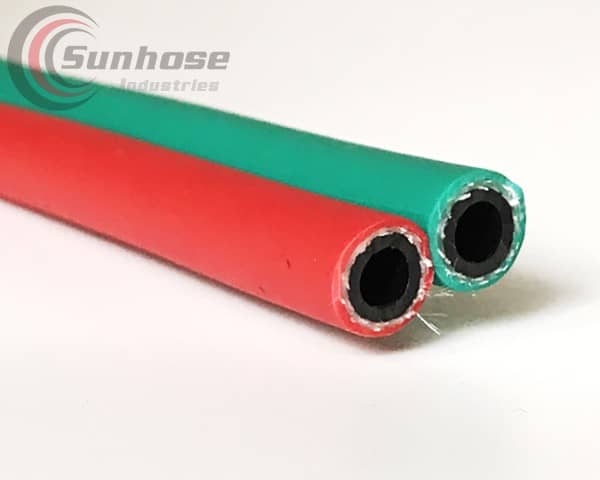
pvc Twin welding hose
Materials Used in Twin Welding Hose Construction
The choice of material for both the inner and outer layers of the hose is crucial in determining its durability and performance. Common materials include:
Rubber
Rubber hoses are widely used for twin welding hoses because of their flexibility, strength, and resistance to heat and abrasion. Rubber hoses are durable, long-lasting, and generally cost-effective, making them an excellent choice for most welding environments.
PVC
Polyvinyl chloride (PVC) is another material often used in the construction of welding hoses. PVC hoses are lightweight, cost-efficient, and resistant to weather and chemicals, but they are generally not as heat-resistant as rubber hoses.
Synthetic Materials
Some hoses may use synthetic blends or composite materials to enhance flexibility, durability, and heat resistance. These hoses tend to be more expensive but can be ideal for specific high-pressure applications.
Different Types of Twin Welding Hoses
When it comes to twin welding hoses, there are several variations, each suited for different applications:
Standard Twin Welding Hose
This is the most common type of twin welding hose, suitable for general-purpose use. It typically handles lower pressures and is used in standard welding tasks.
Heavy-Duty Twin Welding Hose
Heavy-duty hoses are designed for high-pressure applications, providing enhanced durability and resistance to wear. These hoses are often thicker and capable of handling more demanding environments.
High-Pressure Twin Welding Hose
High-pressure hoses are built to withstand significantly higher pressures and are used in industrial or heavy-duty welding environments. They are designed to maintain structural integrity even under extreme conditions.
Advantages of Using Twin Welding Hoses
Using a twin welding hose offers several benefits, including:
Safety Benefits
With two separate channels, there’s less risk of accidental gas mixing. Additionally, the durable construction of the hose helps to prevent leaks and ruptures.
Improved Efficiency
Having both gases in one hose means less clutter, better organization, and a smoother workflow. It’s more efficient and convenient than having two separate hoses for each gas.
Choosing the Right Twin Welding Hose
When selecting a twin welding hose, there are several factors to consider:
Length
Ensure the hose is long enough for your work area. Hoses typically range from 10 feet to 100 feet in length.
Diameter
The hose diameter affects the gas flow rate, so choose one that matches your torch and welding requirements.
Gas Compatibility
Make sure the hose material is compatible with both oxygen and acetylene, and check for any additional features like flame resistance if needed.
Maintenance and Care for Twin Welding Hose
Proper maintenance extends the life of your welding hose. Here are some tips:
Cleaning
Regularly clean the hose to prevent the buildup of dirt or debris, which could block gas flow.
Storage
Store your hose in a cool, dry place away from direct sunlight and heat sources to prevent premature wear.
Periodic Inspection
Check the hose regularly for cracks, leaks, or abrasions. Replace any damaged sections immediately to avoid accidents.
Common Issues with Twin Welding Hoses
Some common problems with twin welding hoses include:
Hose Kinks and Bends
Sharp kinks can restrict the flow of gas, leading to uneven welding. Always avoid sharp bends in the hose.
Cracks and Leaks
Constant use can cause cracks or leaks. Any visible damage to the hose should be addressed immediately.
Wearing Down Due to High Pressure
Prolonged exposure to high pressure can cause the hose material to degrade. Regular checks are necessary to ensure hose integrity.
How to Prevent Damage to Twin Welding Hose
To prevent damage, follow these tips:
Proper Handling
Avoid dragging the hose across rough surfaces, and be mindful of sharp objects that could puncture it.
Regular Checks
Inspect the hose for wear and tear before each use to catch any issues early.
Safety Guidelines When Using Twin Welding Hose
Proper Hose Connections
Ensure that each hose is securely connected to the correct regulator and welding torch. Double-check for leaks before igniting the flame.
Keeping Hoses Free from Contaminants
Contaminants can cause clogging or damage. Keep hoses clean and free from dirt, oil, or chemicals.
Applications of Twin Welding Hose
Twin welding hoses are used in a variety of applications, including:
- Industrial Welding: Manufacturing, construction, and heavy industries.
- DIY and Home Projects: For hobbyists and repair work.
- Automotive Repairs: Welding parts for vehicles and machinery.
How to Replace a Twin Welding Hose
When your hose has worn out, it’s important to replace it to ensure safety and efficiency. Here’s how:
- Disconnect the hose from the regulator and welding torch.
- Inspect the hose for any damage to confirm it needs replacement.
- Install the new hose carefully, ensuring secure connections.
Conclusion
A twin welding hose is an essential piece of equipment for any welder, ensuring that oxygen and acetylene flow efficiently and safely to your welding torch. By understanding the components, materials, and maintenance of the hose, you can optimize your welding setup and enhance safety and productivity.
FAQs
- How long does a twin welding hose last? The lifespan depends on usage and maintenance, but a well-maintained hose can last several years.
- Can a twin welding hose be used for other gases? Yes, but the hose material must be compatible with the specific gases you intend to use.
- How do I fix a leak in a twin welding hose? If you find a leak, replace the damaged section immediately. Do not attempt to repair the hose yourself.
- What size twin welding hose do I need? The size depends on your welding requirements. Typically, a 1/4-inch diameter hose works well for most general purposes.
- Is it safe to use a twin welding hose indoors? Yes, but ensure proper ventilation to prevent the buildup of dangerous gases.
 Like Us on Facebook
 Follow Us on Twitter
 Follow Us on Instagram
 Follow Us on Linkedin
 sunhose
 sunhose