Hybrid Air Hose: What It Is and When to Specify It
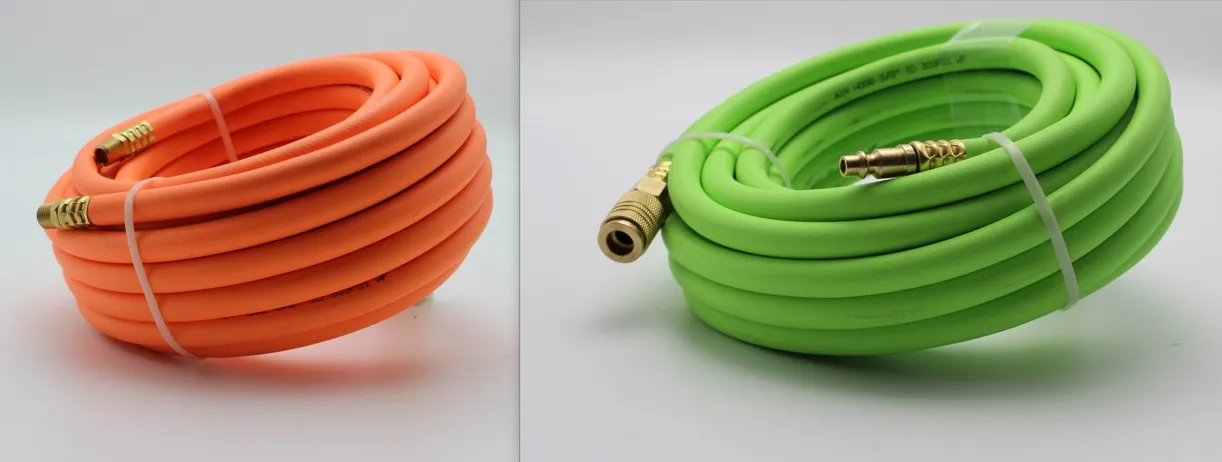
A hybrid air hose is a compressed-air hose built from a blended polymer compound — typically thermoplastic rubber (TPR) over a braided textile cord — rather than from pure rubber or pure PVC. The point of the blend is to remove a trade-off that has existed in air hose for decades: rubber stays flexible in the cold but is heavy, PVC is light but stiffens near freezing. A hybrid hose is engineered to do both.
That is the whole idea. Everything below is detail.
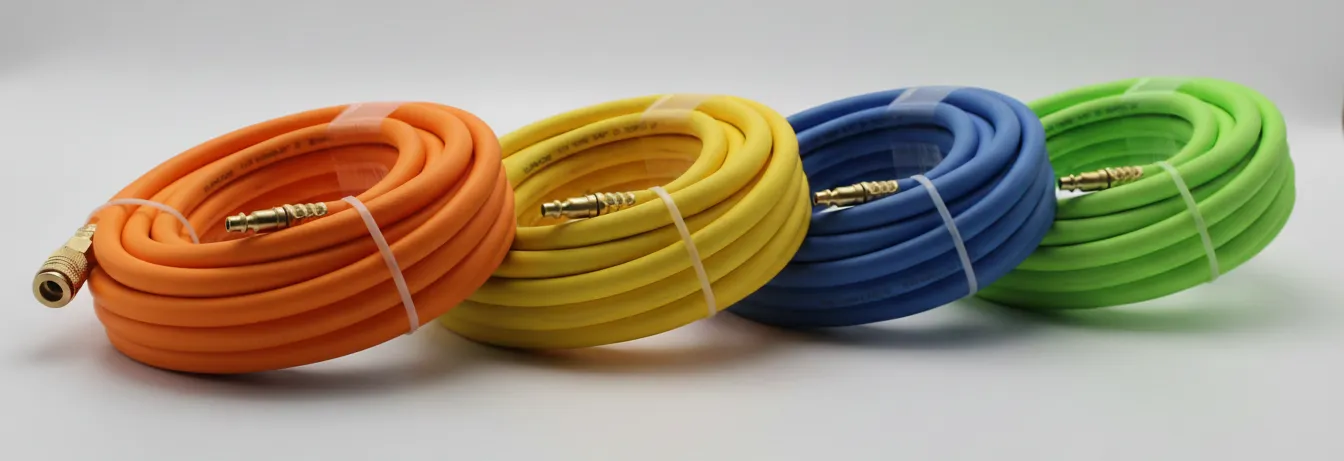 Sunhose hybrid air hose
How the construction differs
A conventional air hose is a single-material tube with reinforcement. A hybrid hose is layered:
- Core — a flexible polymer blend, formulated for low-temperature flexibility rather than for cost.
- Reinforcement — high-tensile braided textile cord, which carries the pressure and stops the hose ballooning.
- Cover — a TPR or rubber-like compound chosen for abrasion and oil resistance.
The result behaves like rubber on the ground — it lies flat instead of coiling up underfoot and does not memorise kinks — while weighing close to what PVC weighs.
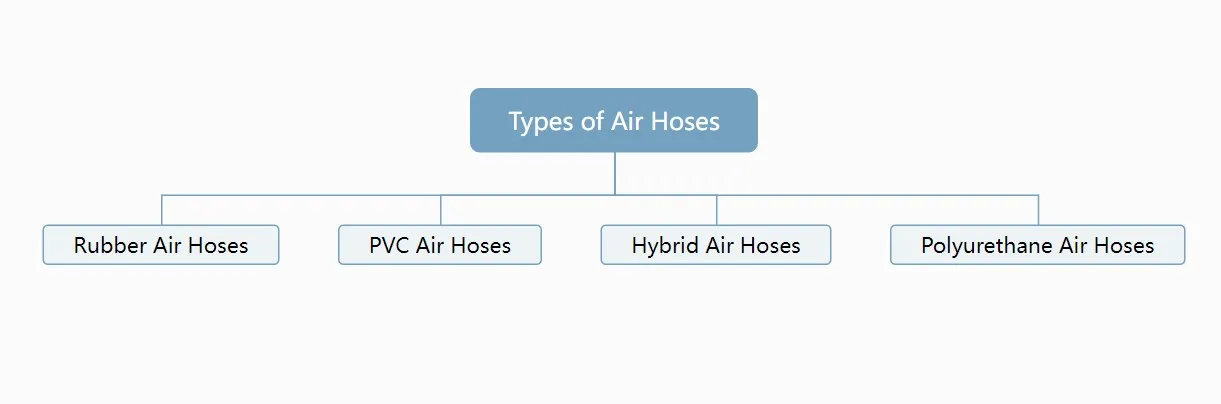 Types of air hoses
Hybrid against the alternatives
| Property | Hybrid | Rubber | PVC | Polyurethane |
|---|---|---|---|---|
| Weight | Light | Heaviest | Lightest | Light |
| Cold flexibility | Excellent, to about −40 °C | Good, to about −20 °C | Poor, stiffens near −5 °C | Excellent, to about −30 °C |
| Kink resistance | Excellent, recovers its shape | Excellent, lies flat | Moderate | Good |
| Abrasion resistance | High | Highest | Moderate | High |
| Oil and grease resistance | Good | Good | Limited | Good |
| Coiling memory | Low — uncoils flat | Low | High — holds loops | Moderate |
| Relative price | Above PVC, below rubber | Highest | Lowest | High |
Two comparisons come up constantly, so they have their own pages: hybrid air hose vs rubber covers the durability and cost trade-off in detail, and the air compressor hose selection guide covers sizing and fittings across all materials.
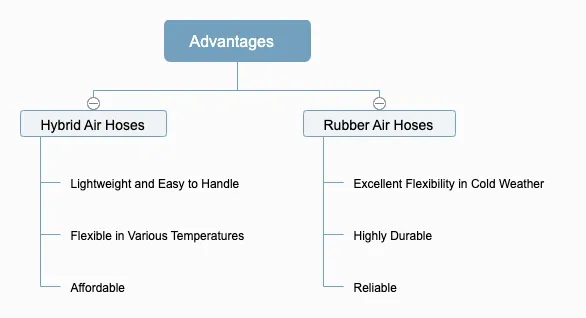 Advantages of hybrid air hoses
Ratings you should see on the spec sheet
Pressure. Professional-grade hybrid air hose is commonly rated to 300 psi (about 20 bar) working pressure, with burst pressure at a 3:1 or 4:1 safety factor. If a supplier quotes only a burst figure, ask for the working pressure — it is the number that governs safe use.
Temperature. A genuine hybrid compound holds flexibility across roughly −40 °C to 65 °C (−40 °F to 150 °F). This range is the main reason to pay more than PVC prices. If a quoted hose only claims −10 °C, it is a PVC hose with a hybrid label.
Sizes and typical duty:
| Hose ID | Typical applications | Common pressure class |
|---|---|---|
| 1/4 inch (6 mm) | Light-duty tools, tyre inflation, workshops, home use | 10–30 bar |
| 3/8 inch (10 mm) | Medium-duty tools, construction, automotive | 20–40 bar |
| 1/2 inch (13 mm) | Heavy-duty equipment, industrial manufacturing | 30–50 bar |
3/8" is the general-purpose size for professional work. Go to 1/2" for sanders, spray guns or runs beyond 30 m, where pressure loss along the hose starts to cost you tool performance.
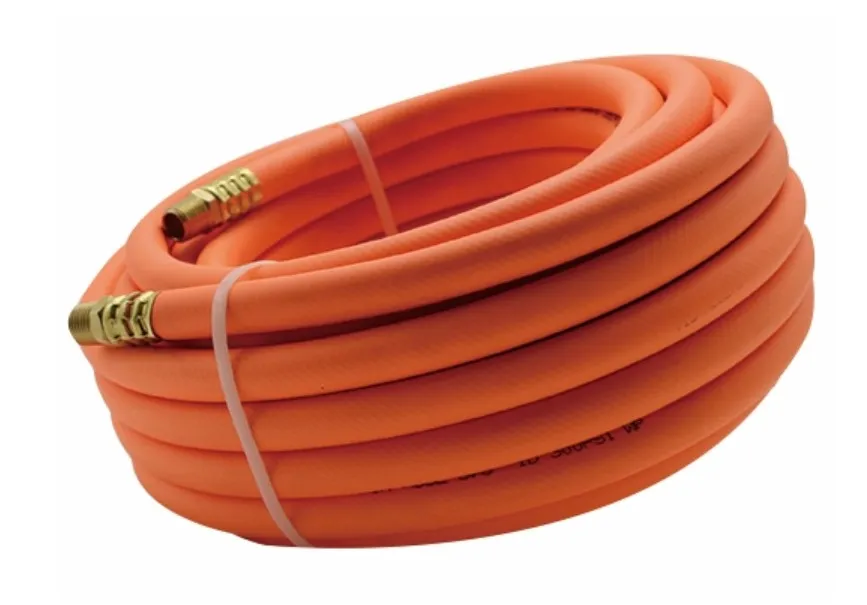 Red hybrid air hose
Where hybrid hose earns its price
Hybrid hose is worth the premium wherever the hose gets moved a lot — its advantages are about handling, not about raw strength.
- Construction sites — dragged across rough ground, left out overnight, used in winter. Cold flexibility and abrasion resistance both matter.
- Automotive workshops — constant repositioning around vehicles, plus exposure to oil and grease. Low coil memory means it does not fight the technician.
- Manufacturing — continuous duty on assembly and finishing lines, where a hose that lies flat is a smaller trip hazard.
- Agriculture — long runs, wide temperature swings, seasonal storage.
Where hybrid does not pay: a hose that lives permanently on a reel in a heated indoor shop. There, PVC does the same job for less.
Choosing and ordering
Working environment first. Temperature extremes, oil exposure, and abrasion decide the material. Everything else is sizing.
Length and diameter together. Pressure drop grows with length and shrinks with diameter. Specify the tool's air demand, not just the hose length.
Fittings and thread standard. Confirm BSPT, NPT or PCL before ordering — BSPT and NPT thread together but do not seal, which is a common and expensive mistake on export orders. Bulk reels, cut lengths and finished assemblies with fittings crimped on are all normal ways to buy.
Certification and consistency. For wholesale volumes, ask what the batch-to-batch tolerance is on ID, wall thickness and burst test, and ask to see the test report rather than a datasheet.
Notes for distributors and wholesale buyers
Hybrid air hose sits in a useful retail position: visibly better than the cheapest PVC on the shelf, and noticeably cheaper than rubber. Buyers who have handled a rubber hose all winter understand the value proposition in about five seconds, which makes it an easy in-store sell.
Practical points from the trade side:
- Demand is seasonal. Hybrid moves hardest going into cold months, when PVC hose in stores starts stiffening and customers come in looking for a replacement.
- Colour is a merchandising lever. Hybrid compound takes bright pigment well, and a distinctive colour separates your line from generic PVC on the same shelf.
- Sell the length range. 25 ft, 50 ft and 100 ft assemblies cover most of the market; stocking only one length loses sales at both ends.
- Private label is straightforward. Compound colour, printed branding, reel length and fitting standard are all specifiable at manufacture.
Maintenance
- Inspect before use for cuts, bulges or exposed braid — replace, do not patch.
- Store on a reel, out of direct sunlight. UV is the main ageing mechanism.
- Drain condensate after use so water does not sit in the line.
- Use a short whip hose at the tool end. It absorbs the flexing that would otherwise fatigue the main hose at its most vulnerable point.
- Reusable fittings and splicers let you shorten a damaged hose rather than scrap it.
FAQ
What is a hybrid air hose made of? A blended polymer compound — usually thermoplastic rubber over a braided textile reinforcement — rather than a single material. The blend gives rubber's cold flexibility at close to PVC's weight.
Is a hybrid air hose better than rubber? For handling, yes: it is far lighter and does not hold coils. For pure abrasion resistance in the harshest service, rubber still leads. See the full comparison.
What pressure can a hybrid air hose handle? Professional grades are typically rated 300 psi (about 20 bar) working pressure, with burst pressure three to four times higher.
What temperature range does hybrid air hose work in? Roughly −40 °C to 65 °C. Cold-weather performance is its main advantage over PVC.
What size hybrid air hose should I buy? 3/8" ID for general professional use, 1/4" for light tools and tight spaces, 1/2" for high-consumption tools or long runs.
Can hybrid air hose be repaired? Yes. Reusable fittings and splicers let you cut out a damaged section and re-terminate, provided the remaining hose is sound.
Will it work with my existing fittings? Hybrid hose uses the same fitting standards as any other air hose. Confirm the thread standard — BSPT, NPT or PCL — and the ID match.
Sunhose manufactures hybrid air hose in bulk reels, cut lengths and finished assemblies, with custom colours, print and fitting standards for distributor and OEM programmes. See the hybrid air hose product page or send us your specification for a quote.